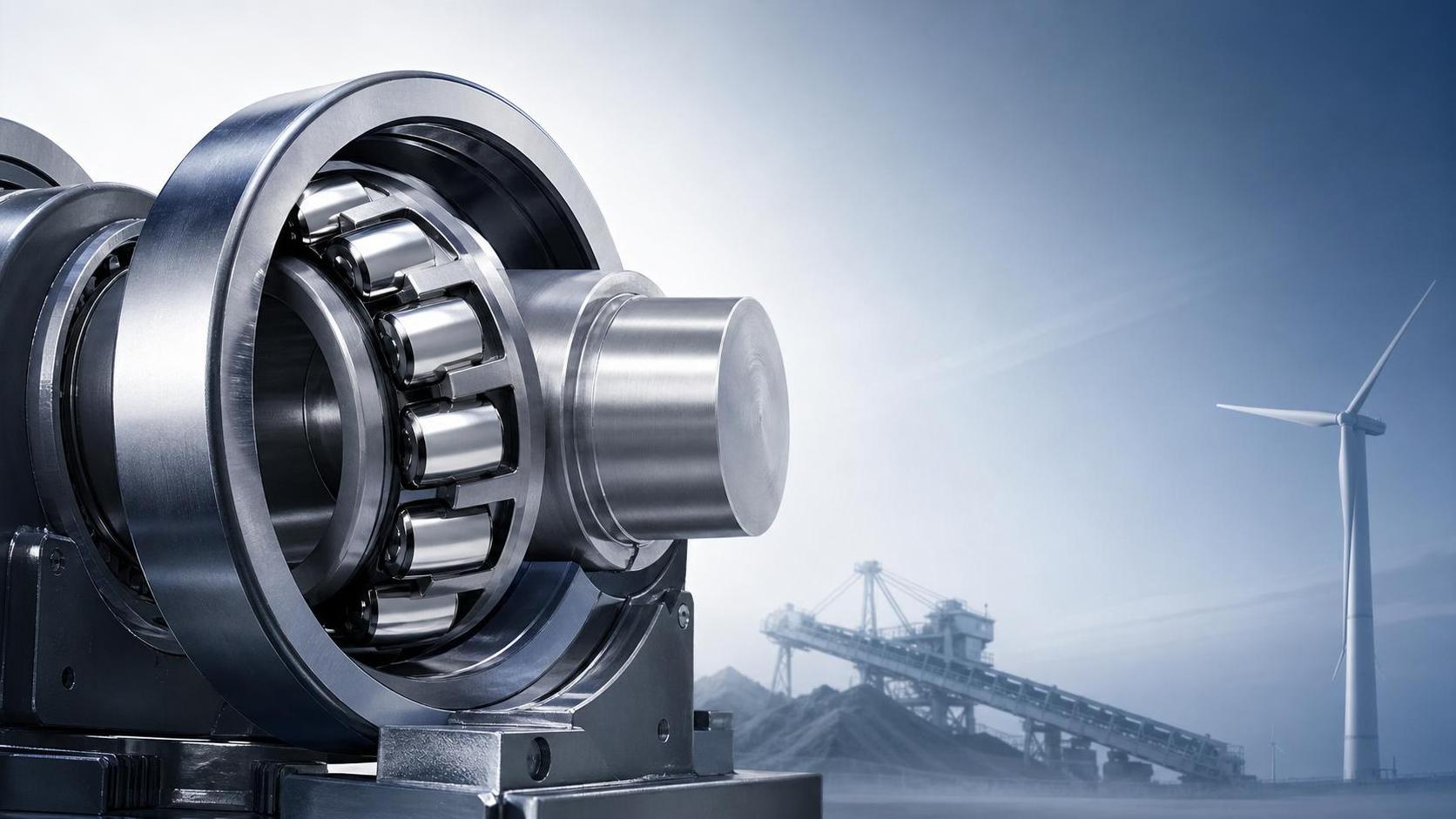
When misalignment becomes a reliability problem
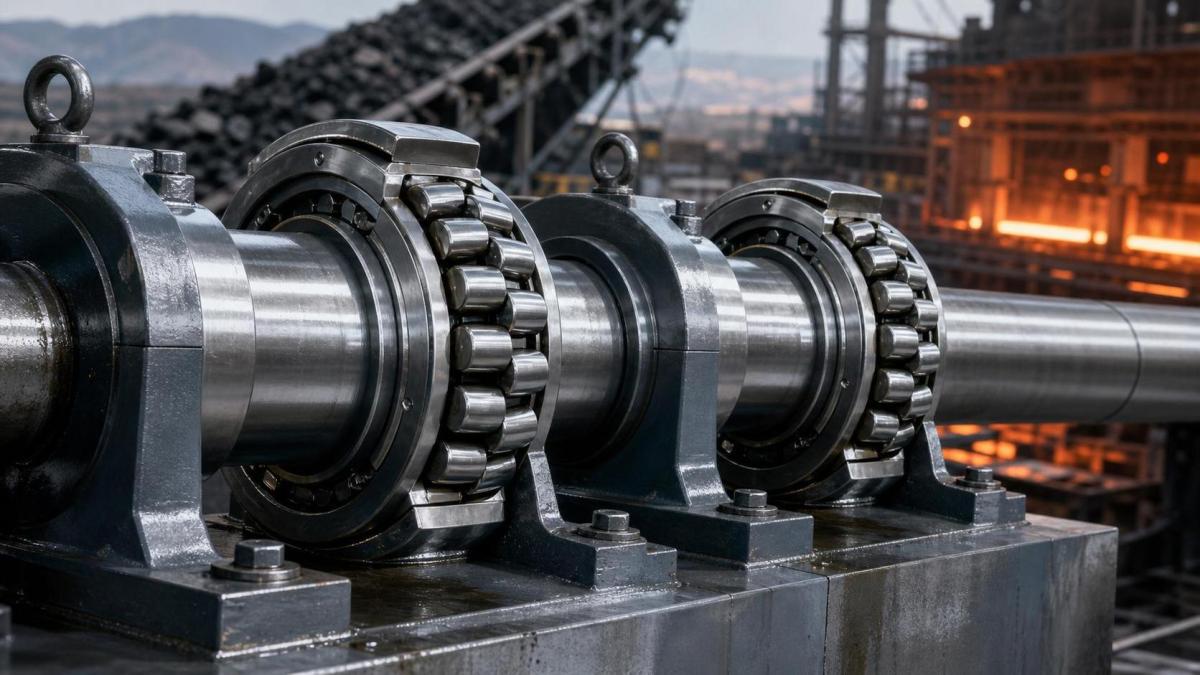
Vibration, rising temperature, and uneven wear rarely stay isolated for long. In rotating equipment, they often point to shaft misalignment that slowly damages surrounding parts.
That is where a Self-Aligning Roller Bearing becomes more than a catalog choice. It can absorb angular error while still carrying heavy radial loads and meaningful axial loads.
In practical use, the value is not only technical. Better alignment tolerance can reduce shutdowns, stabilize maintenance intervals, and protect housings, shafts, and seals from secondary damage.
The real question is not whether a Self-Aligning Roller Bearing is good. The better question is when it solves the actual problem more effectively than a standard bearing arrangement.
This matters in industries such as mining, steel, wind power, and machine tools, where load changes, contamination, and installation limits create very different operating realities.
With long production experience since 2007, Liaocheng Tianyue Bearing and its subsidiary Anhui Luban Bearing have worked across these conditions, combining testing capability and precision grinding to support bearing selection that matches field demands, not only drawings.
Different sites create different misalignment patterns
Shaft misalignment does not come from one source. In one plant, the issue starts with mounting error. In another, it appears after the base frame settles under load.
Thermal growth also changes the picture. A line that starts aligned at room temperature may drift once production reaches full temperature and surrounding components expand unevenly.
Long shafts behave differently again. Deflection under heavy load can create alignment error that is small on paper but severe at operating speed.
Because of that, a Self-Aligning Roller Bearing is usually judged by context. The same bearing can be ideal in a vibrating conveyor and unnecessary in a rigid, compact gearbox.
A nearby comparison helps. In cleaner, lighter-duty positions, a sealed deep groove product such as Long Life Precision Rubber Sealed Bearing China Factory Supply 6300 2RS Deep Groove Ball Bearings may be more appropriate, especially when low friction and compact design matter more than self-alignment.
What to verify before changing bearing type
- Whether the misalignment is constant, intermittent, or load-induced.
- Whether radial load dominates, or axial load also shifts during operation.
- Whether contamination, moisture, or shock loads shorten lubricant life.
- Whether the housing and shaft tolerances support the intended fit.
- Whether speed is moderate enough for a Self-Aligning Roller Bearing design.
Mining and bulk handling usually reward alignment tolerance
Conveyors, crushers, and vibrating screens rarely operate in perfect conditions. Dust enters housings, shock loads arrive without warning, and support structures move more than designers expect.
In these settings, a Self-Aligning Roller Bearing often performs well because it accepts moderate shaft deviation without forcing stress into rollers and raceways too aggressively.
The key judgment point is not simply heavy load. It is the combination of heavy load, structural movement, and maintenance intervals that may be longer than planned.
If the bearing seat is likely to distort, the choice should also include a review of housing rigidity, sealing method, and grease replenishment access. The bearing alone cannot compensate for poor support design.
Steel and hot-process lines need more than load capacity
Steel mills and hot conveying equipment create a different type of challenge. Heat, scale, water, and load fluctuation change the operating condition hour by hour.
Here, a Self-Aligning Roller Bearing is often selected because thermal expansion can alter alignment after startup. A rigid bearing arrangement may run well cold, then deteriorate under production temperature.
The important detail is lubrication stability. If grease or oil selection does not match heat and contamination levels, the alignment advantage disappears quickly.
This is why proven manufacturing control matters. Companies with dedicated testing equipment and precision grinding capability are better positioned to deliver consistency where roller profile, clearance, and surface finish affect actual service life.
Wind power and long shafts need careful dynamic judgment
Wind power applications look stable from a distance, but the bearing environment is highly dynamic. Variable load direction, nacelle movement, and shaft deflection all influence alignment behavior.
A Self-Aligning Roller Bearing can help where the shaft does not stay perfectly centered during changing load cycles. It is especially useful when structural deformation is unavoidable.
Still, this is not a default answer for every wind application. Cage design, lubrication route, internal clearance, and sealing strategy all need to match the service profile.
In export-oriented projects, supply stability also matters. Tianyue Bearing serves customers across China and overseas markets, which supports projects needing repeatable quality and consistent delivery across multiple maintenance cycles.
The same bearing choice does not fit machine tools and automotive lines
Some applications sound similar because both rotate at speed, yet their requirements differ sharply. Machine tools and automotive equipment often value precision, speed, and controlled running noise more than broad misalignment tolerance.
In these cases, using a Self-Aligning Roller Bearing only because misalignment exists can be a mistake. The first step should be identifying whether the root issue is alignment, stiffness, vibration source, or assembly accuracy.
Where loads are lighter and sealing is a higher priority, a product like Long Life Precision Rubber Sealed Bearing China Factory Supply 6300 2RS Deep Groove Ball Bearings may support a cleaner and more compact arrangement.
How the demand shifts by application
Common misjudgments appear before installation, not after failure
One frequent mistake is treating all vibration as proof that a Self-Aligning Roller Bearing is needed. Vibration can come from imbalance, looseness, damaged couplings, or poor lubrication.
Another mistake is comparing only basic load ratings. A higher rating does not automatically mean better performance if speed, sealing, or mounting conditions are unsuitable.
Cost is often judged too narrowly. A cheaper bearing can become expensive when unplanned shutdowns, shaft rework, and repeated replacement are included.
There is also a tendency to copy a successful setup from one line to another. Similar equipment may run under very different thermal cycles, contamination levels, or support stiffness.
Practical checks that prevent wrong selection
- Measure shaft and housing condition during real operating temperature.
- Review load direction changes, not only maximum load values.
- Confirm lubricant type, relubrication path, and contamination control.
- Check whether seals, sleeves, and fits match the new bearing arrangement.
- Estimate total maintenance impact over the bearing service interval.
Choosing the right next step on site
A Self-Aligning Roller Bearing solves the most value when misalignment is real, recurring, and linked with heavy-duty operating conditions. That is why field context matters more than generic preference.
In actual projects, the strongest approach is to map the application first. Note load pattern, shaft movement, temperature range, contamination level, speed, and maintenance access.
Then compare whether the problem is better addressed by self-alignment capability, a different sealing concept, tighter installation control, or a revised housing design.
For equipment running in mining, steel, wind power, or other demanding sectors, that comparison often leads back to the Self-Aligning Roller Bearing because it addresses both load and alignment reality.
The useful next move is simple: document the operating condition, verify the source of misalignment, and match the bearing arrangement to the long-term service environment rather than the short-term symptom.

Thank you very much for writing to us. Please leave your message and contact information, we will reply to you within 24 hours.