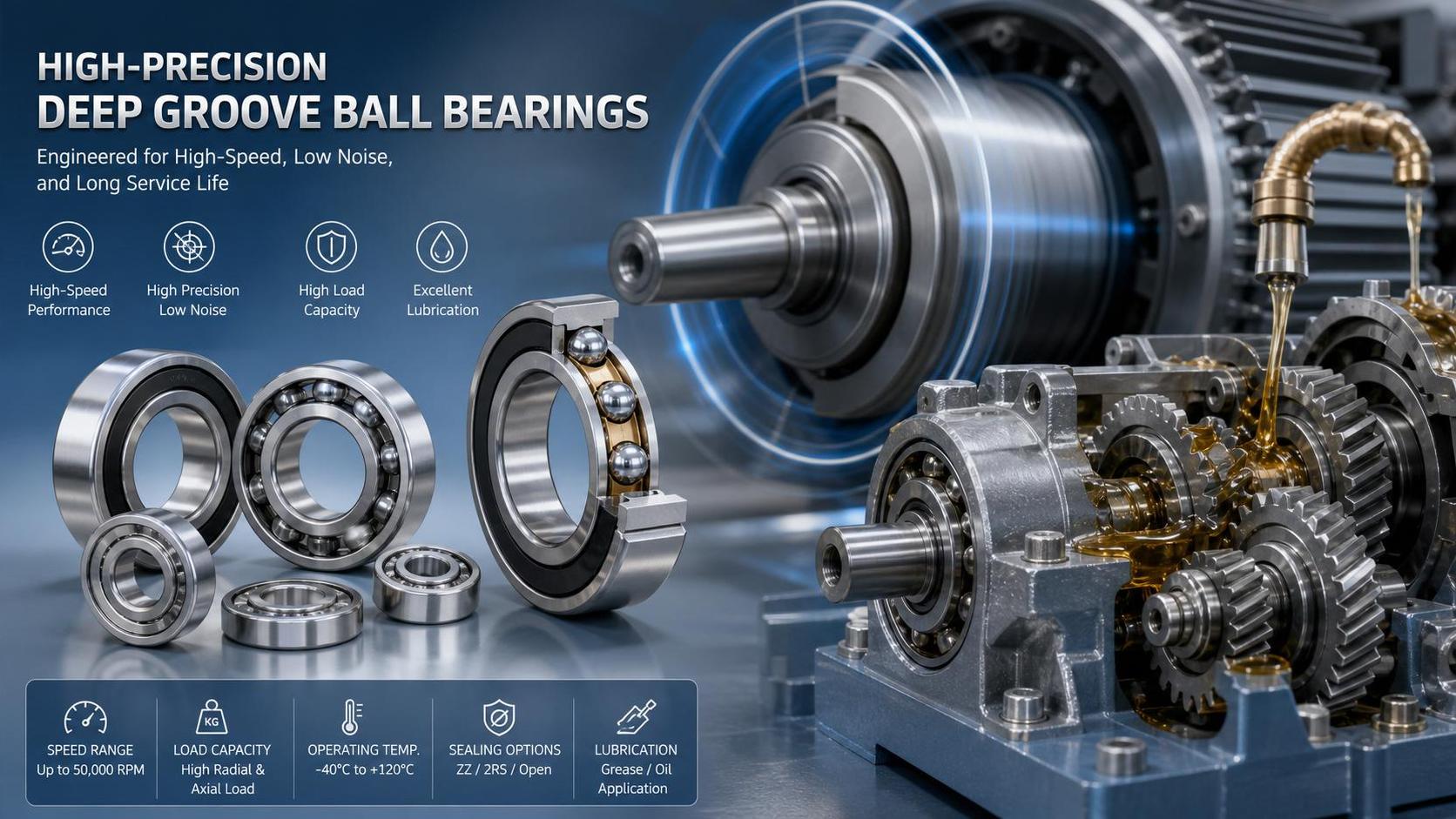
How to Choose a Deep Groove Ball Bearing for Speed and Load
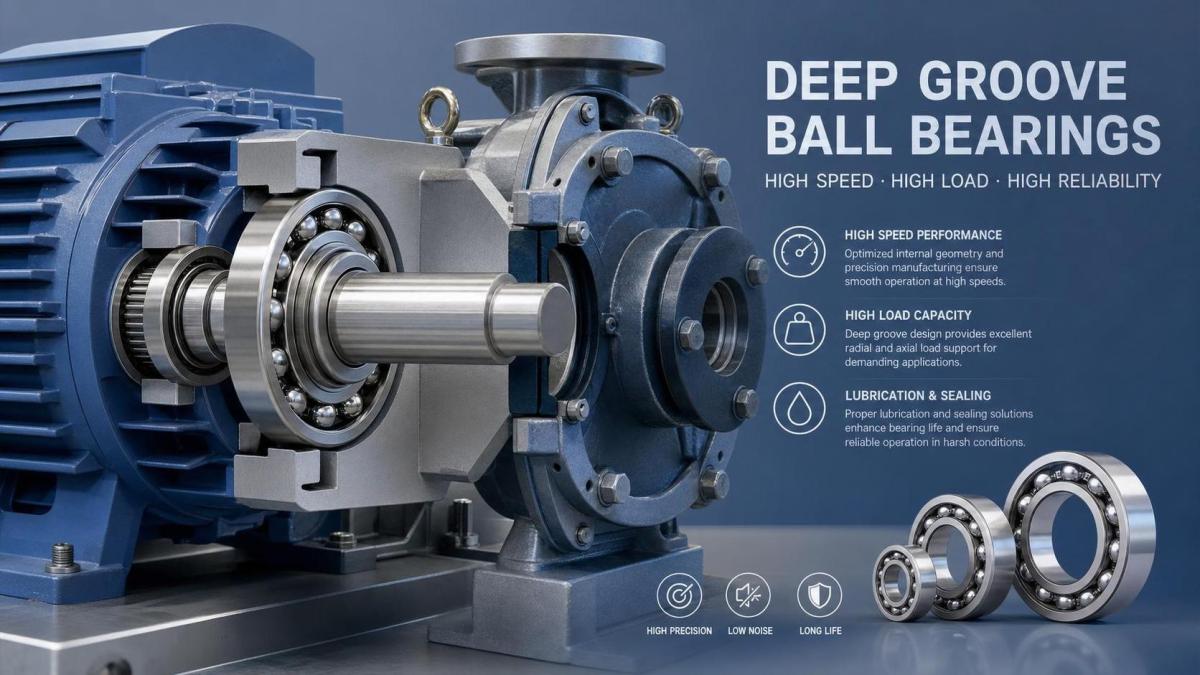
Choosing the right Deep Groove Ball Bearing for high speed and changing loads is rarely a simple size match.
A good selection affects noise, heat, service life, maintenance intervals, and total operating cost.
In fast-moving equipment, even a small mismatch can lead to vibration, grease failure, or early fatigue.
That is why Deep Groove Ball Bearing selection should start from operating conditions, not only catalog dimensions.
The most reliable approach is to review speed, load type, accuracy, lubrication, sealing, and mounting quality together.
This guide breaks the process into practical checkpoints that support faster and safer selection decisions.
Start with the Real Operating Profile
Before comparing models, define how the bearing actually works in the machine.
Rated speed alone is not enough if starts, stops, shock loads, or temperature swings are frequent.
A Deep Groove Ball Bearing performs best when the duty profile is clearly understood from the start.
- Maximum and continuous operating speed
- Radial load, axial load, and combined load pattern
- Duty cycle, reversals, and acceleration frequency
- Ambient contamination, moisture, and heat exposure
- Target life, maintenance interval, and noise limit
This first step often reveals whether a standard bearing is enough or a more specialized solution is safer.
Balance Speed Rating with Load Capacity
A common mistake is choosing the highest speed option without checking load margin.
Another mistake is selecting only for load, then discovering excessive heat at high rpm.
Deep Groove Ball Bearing design naturally supports high speed, but speed and load still trade against each other.
Higher speed increases friction, raises temperature, and reduces lubricant stability if internal design is not suitable.
At the same time, heavier load increases contact stress and may shorten fatigue life.
What to check first
- Dynamic load rating for life calculation
- Static load rating for startup or impact risk
- Limiting speed under grease or oil lubrication
- Thermal behavior at continuous running speed
If speed is very high, lighter cages, tighter geometry control, and better lubricant flow become more important.
If load is unstable, life calculations should use equivalent load instead of nominal values only.
Understand Radial and Axial Load Limits
Deep Groove Ball Bearing units mainly carry radial load, but they can also support moderate axial load.
That flexibility is useful, but it should not be overestimated in demanding conditions.
When axial load grows too large, internal stress rises quickly and performance becomes less predictable.
This matters even more in motors, pumps, conveyors, gearboxes, and compact assemblies with limited shaft support.
In actual projects, the load path through the full assembly often matters more than isolated bearing data.
Practical judgment points
- Map the true direction of force during steady operation.
- Check transient axial peaks during startup, braking, or impact events.
- Review whether misalignment changes the effective load zone.
- Confirm if another bearing shares or concentrates axial force.
A Deep Groove Ball Bearing is often a cost-effective choice, but only when the load spectrum fits its real capability.
Choose Accuracy, Clearance, and Noise Level Carefully
For high-speed applications, precision class and internal clearance strongly affect stability.
An underspecified bearing may run, but vibration and temperature can drift outside safe limits.
A Deep Groove Ball Bearing for electric motors, spindles, or quiet consumer equipment needs tighter control.
Key selection factors
- Precision grade influences runout and rotational smoothness.
- Internal clearance affects heat growth after mounting.
- Low-noise raceway finishing supports quieter operation.
- Cage quality affects stability at elevated speed.
Clearance selection deserves special attention because press fit and temperature both change internal working clearance.
If the clearance becomes too small, friction rises fast and the speed advantage may disappear.
If the clearance is too large, vibration and noise become harder to control.
Do Not Treat Lubrication and Sealing as Secondary Issues
Many bearing failures blamed on load are actually lubrication failures.
This is especially true when a Deep Groove Ball Bearing runs fast, hot, or in contaminated environments.
Grease type, fill quantity, and seal design directly affect torque, heat, and life.
Shielded versions help reduce dust intrusion with lower friction than contact seals in many cases.
For small assemblies, a compact part such as 626 ZZ 626-ZZ 626ZZ 626 2Z ZZ Dimensions 6x19x6 mm Mini Single Row Deep Groove Ball Bearing for Window Frames may suit light-duty, space-limited designs.
Even then, speed, fit, and grease compatibility should still be reviewed against the actual duty cycle.
Useful lubrication checks
- Grease base oil viscosity at operating temperature
- Thickener compatibility with seals and environment
- Relubrication interval for continuous service
- Seal drag effect on speed and heat generation
Check Housing Fit, Shaft Fit, and Mounting Conditions
A well-selected bearing can still fail early if fits are wrong.
Interference that is too high may reduce clearance too much.
Loose fits may cause creep, fretting, and unstable running accuracy.
This is one reason Deep Groove Ball Bearing selection should always include shaft and housing tolerance review.
Surface finish, shoulder geometry, and mounting force direction also matter more than many teams expect.
If the installation process loads through the rolling elements, raceway damage can occur before startup.
Use Application Context to Narrow the Choice
Different industries use the same bearing family in very different ways.
That is why the right Deep Groove Ball Bearing in one machine may be the wrong choice in another.
From a market perspective, application-specific tuning now matters more than generic substitution.
That trend is visible across machine tools, steel mills, mining systems, vehicles, and wind power assemblies.
Evaluate Supplier Capability, Not Only Catalog Data
Selection risk also depends on manufacturing consistency and technical support.
A Deep Groove Ball Bearing with good paper data still needs stable grinding quality, material control, and inspection discipline.
Liaocheng Tianyue Bearing Co., Ltd., established in 2007, combines bearing research, design, and production in one system.
Its technical base includes specialized testing equipment and high-precision CNC grinding machines.
Its subsidiary, Anhui Luban Bearing Company, produces multiple bearing series for machine tools, steel mills, coal mines, automobiles, and wind power.
That broader application experience can help when evaluating trade-offs between speed, load, noise, and service life.
In procurement decisions, that support often reduces trial-and-error cost more than a lower initial unit price.
A Simple Decision Framework
If time is limited, use a structured screening method.
- Confirm shaft size, housing space, and mounting layout.
- Calculate equivalent load and compare life targets.
- Check limiting speed with the intended lubrication method.
- Select clearance and precision after fit analysis.
- Review sealing, contamination risk, and relubrication plan.
- Validate supplier process capability and test support.
This process makes Deep Groove Ball Bearing selection more objective and easier to defend in technical review.
It also helps identify whether a standard model is sufficient or whether a customized option is worth considering.
Final Takeaway
The best Deep Groove Ball Bearing is not simply the one with the highest speed or largest load number.
It is the one that matches the real operating profile, assembly conditions, lubrication plan, and life target.
When selection is done carefully, performance becomes more stable and operating risk drops significantly.
For the strongest result, compare catalog data with application details, then confirm the choice with a capable manufacturing partner.
That approach leads to a Deep Groove Ball Bearing solution that is easier to approve, easier to maintain, and more reliable in long-term service.

Thank you very much for writing to us. Please leave your message and contact information, we will reply to you within 24 hours.