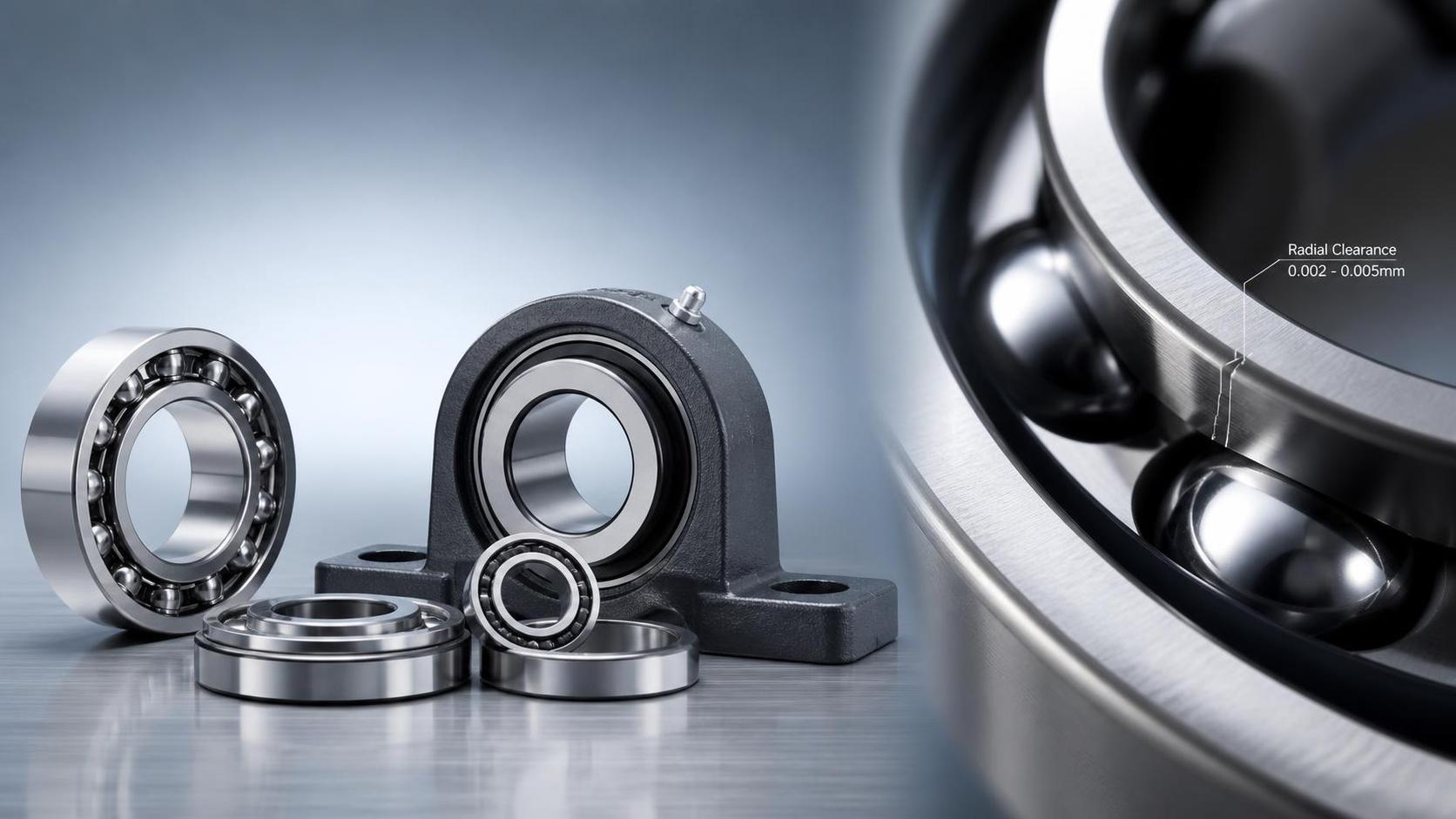
How Precision Bearing Clearance Affects Low-Noise Performance
Precision Bearing clearance plays a decisive role in low-noise performance, especially for operators who need stable, smooth, and reliable equipment. Even a small clearance variation can increase vibration, heat, and noise, affecting machine accuracy and service life. For industries that demand quiet operation and consistent output, choosing the right bearing specification is essential. As a bearing manufacturer focused on quality and precision, we understand how proper clearance control helps deliver quieter performance and better operating results.
In daily use, “noise” is rarely caused by one single factor. It is usually the result of clearance, fit, lubrication, mounting accuracy, shaft condition, and operating load working together. That is why operators often notice a bearing becoming louder long before it fails. The sound may start as a light hiss or irregular hum, then turn into vibration, temperature rise, and unstable running. In many cases, the root issue is not the bearing type itself, but how its internal clearance matches the actual working condition.
Why clearance matters more than many users expect
Bearing clearance is the internal space between rolling elements and raceways before load is applied. In a precision bearing, that space is controlled within a narrow range because it affects how smoothly the contact surfaces share load. Too much clearance allows the rolling elements to move more freely than intended, which often shows up as rattling, uneven motion, or a higher vibration level. Too little clearance can be just as troublesome: the bearing may run tight, generate excess friction, and produce a steady rise in noise and heat.
For low-noise applications, the target is not simply “less clearance.” The right answer depends on speed, load direction, temperature, fit tolerance, and lubrication state. A bearing running at moderate speed with light load may need a different clearance class than one operating under continuous heavy load. This is one reason experienced operators pay attention to the system, not only the bearing catalog line.
The noise path is usually mechanical, not mysterious
When clearance is not well matched, the rolling elements do not stay in a stable load zone. They may shift slightly under rotation, and that micro-movement becomes audible vibration. If the fit between bearing and housing is also off, the issue becomes harder to control because the bearing can deform once installed. In real workshops, operators often hear the change first during no-load or light-load running, which is a useful warning sign. The machine may still function, but its acoustic profile is already telling you something about the internal condition.
This is especially important in precision equipment such as machine tools, motors, and speed-sensitive assemblies. In those environments, low-noise performance is not only about comfort. It can be an early indicator that the bearing is working in a more stable contact state, which usually supports better consistency over time.
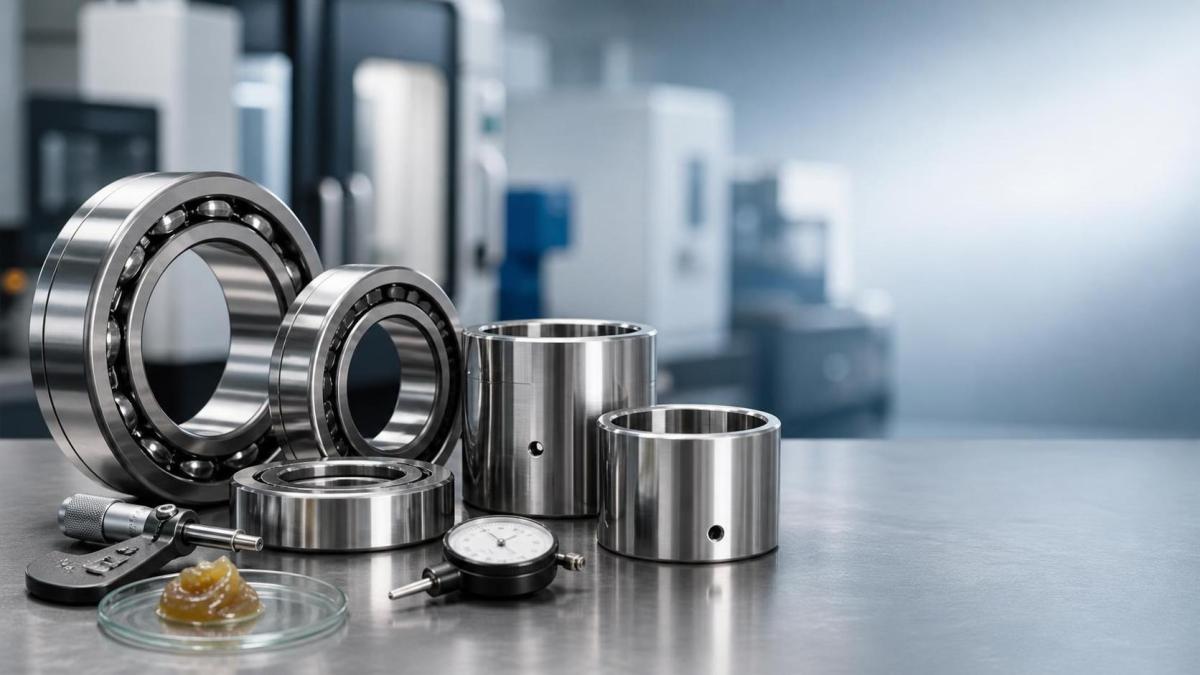
How clearance, fit, and temperature interact
One common mistake is judging clearance only in the unopened bearing. What matters in operation is the effective clearance after installation and heating. Shaft interference, housing fit, and operating temperature all change the internal geometry. A bearing that looks correct on paper can become too tight once mounted if the fit is aggressive or the temperature rise is higher than expected. The opposite also happens: a bearing that starts with enough clearance may end up too loose after assembly in a machine with a large thermal gradient.
This is why precision bearing selection needs a practical view. The engineer or operator should ask: What is the actual speed range? Is the load mostly radial, axial, or mixed? Does the system heat up quickly? Is the machine expected to run quietly from startup, or only after a warm-up period? These questions matter more than a generic “high precision” label.
Lubrication adds another layer. Insufficient or poorly matched grease can amplify noise even when clearance is correct. Over-lubrication can also increase churn and temperature, which changes the operating clearance indirectly. So low-noise performance is usually the result of a balanced system, not a single specification choice.
What operators can observe on site
For operators and maintenance staff, the easiest way to think about clearance is through symptoms. A bearing with excessive clearance may create a light knocking sound, unstable feel during slow rotation, or a vibration pattern that becomes more obvious under varying load. A bearing that is too tight often shows a different pattern: rising temperature, a “stiff” rotation feel, and noise that becomes sharper as speed increases.
These signs do not replace measurement, but they help narrow the problem quickly. If the noise changes after lubrication, the issue may be related to grease type, fill amount, or contamination. If the noise changes after installation, fit or alignment deserves attention. If the noise appears only at certain speeds, the operating clearance may be crossing into an unfavorable range under dynamic conditions.
That is also why bearing testing matters. Liaocheng Tianyue Bearing Co., Ltd., established in 2007, has built its production and inspection capability around bearing R&D, design, and manufacturing, supported by specialized bearing testing equipment and high-precision CNC grinding machines. In practice, this kind of setup is valuable because low-noise performance is difficult to verify by appearance alone. Precision machining and testing help keep clearance control within the intended range before the bearing reaches the machine.
Not every application wants the same clearance
A deep groove ball bearing used in a relatively quiet motor may need a different clearance choice from a self-aligning roller bearing in a harsher industrial environment. The bearing structure, load pattern, and misalignment tolerance all affect how clearance behaves in service. In wind power, steel mills, coal mines, automotive systems, and machine tools, the operating conditions are too different to treat as one category. Even within the same industry, the best choice can change from one machine platform to another.
That is why manufacturers and users usually need to evaluate clearance alongside dimensions, lubrication method, rotational speed, and installation accuracy. A “quieter” bearing on the shelf is not always the quieter bearing in the machine. What matters is the working state after assembly.
Where precision makes the difference
Precision in bearing clearance is not an abstract quality claim. It is a manufacturing discipline. Grinding accuracy, consistency of raceway geometry, and repeatable inspection all influence whether a bearing can deliver the same behavior from one batch to the next. For users, that repeatability matters because unpredictable clearance creates unpredictable noise. If one bearing runs quietly and the next one does not, the machine team ends up chasing symptoms instead of controlling the system.
This is one reason many buyers in demanding industries pay close attention to suppliers with real manufacturing and testing capability rather than only catalog coverage. A company with integrated development and production can often respond more realistically to clearance-related requirements, especially when the application needs a balance between imported-grade quality and practical cost control. Liaocheng Tianyue Bearing Co., Ltd. and its subsidiary, Anhui Luban Bearing Company, have built their business around that kind of production focus, supplying bearings to machinery, metallurgy, mining, automotive, and wind power users across China and in overseas markets. The value here is not a slogan; it is the ability to keep specification control consistent enough that low-noise performance can be repeated, not just promised.
A practical way to judge whether clearance is right
If a machine is louder than expected, do not jump directly to replacement. Start by checking operating temperature, lubrication condition, installation fit, shaft and housing accuracy, and whether the noise changes with speed or load. If the machine is new, compare the behavior against the intended working condition rather than relying on a short test run. If the machine has been in service for some time, look for patterns: does the sound appear after warm-up, after load changes, or during startup?
For new projects, it helps to confirm the clearance requirement early, alongside speed, load, and mounting method. That is often the cleanest way to avoid noise problems later. In many cases, a quieter machine is not the result of a special trick; it comes from specifying the right precision bearing clearance, verifying the installation, and keeping the operating conditions within the expected range.
When those pieces line up, low-noise performance stops being an accident. It becomes a repeatable outcome.

Thank you very much for writing to us. Please leave your message and contact information, we will reply to you within 24 hours.