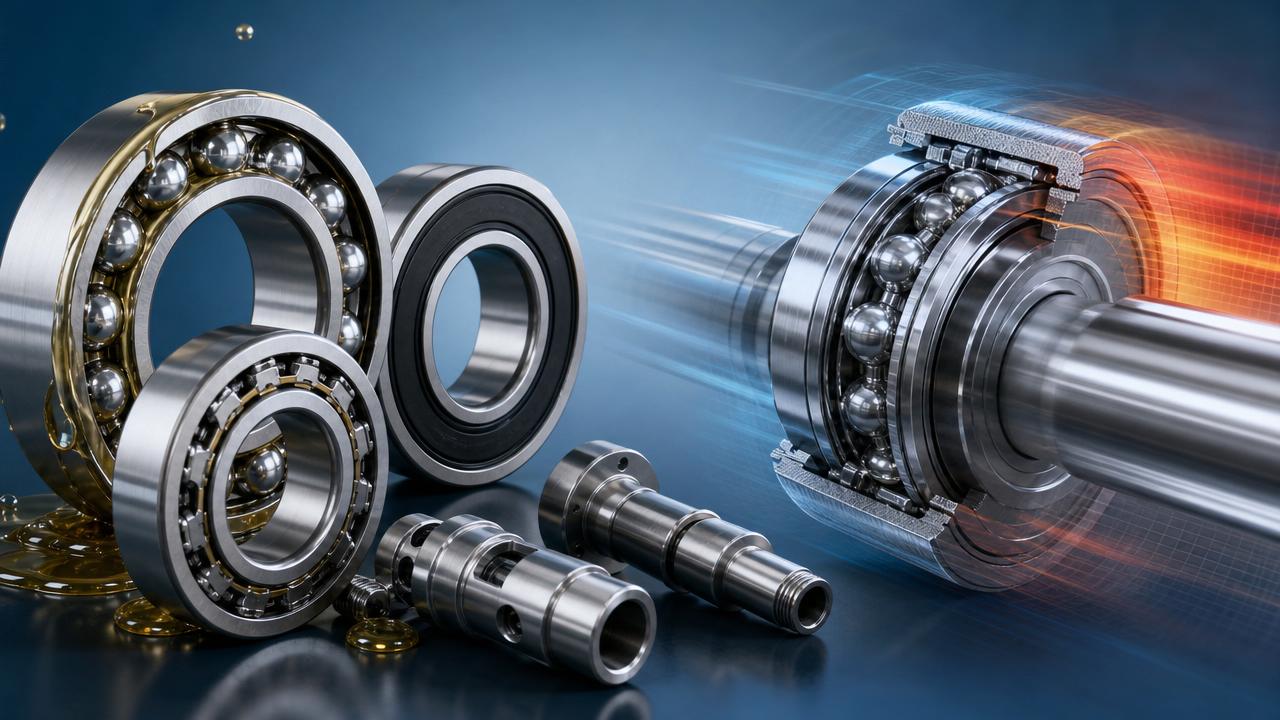
When a bearing’s catalog speed looks impressive, real-world performance often tells a different story. In practice, load, lubrication, temperature, sealing, fit-up, and machine vibration can all lower deep groove ball bearing speed ratings and limit stable operation. Understanding these factors helps engineers choose the right bearing, reduce failure risk, and maintain reliable speed in demanding industrial applications.
For most buyers and engineers, the key answer is simple: a bearing rarely reaches catalog speed unless operating conditions are close to ideal. Real speed capacity is usually reduced by combined thermal, mechanical, and lubrication limits.
That matters because selecting a bearing only by published speed can lead to overheating, grease failure, excess noise, cage damage, or early shutdown. The better approach is to evaluate the full operating system, not just the bearing model.
Why catalog speed and real operating speed are often different
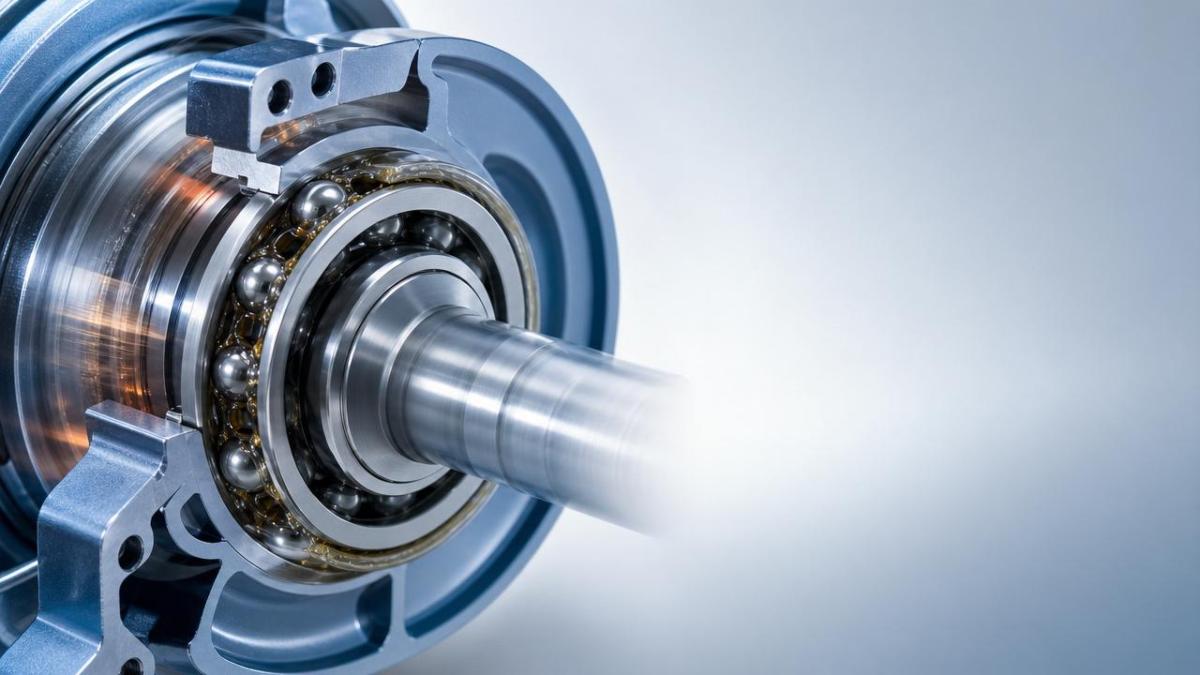
Manufacturers publish reference speeds and limiting speeds under controlled conditions. These values are useful for comparison, but they do not guarantee that the same bearing will run safely at that speed in every machine.
In actual service, deep groove ball bearing speed ratings depend on heat generation and heat dissipation. If friction creates more heat than the assembly can release, temperature rises quickly and speed must be reduced.
Even a high-quality deep groove ball bearing can lose real speed capacity when radial load is high, lubrication is poorly matched, seals create drag, or shaft and housing accuracy are not sufficient.
For maintenance teams, this is often the hidden cause behind repeated bearing temperature alarms. The bearing itself may not be defective. The real issue is that the application conditions do not support the target speed.
How load reduces the true speed capacity of a bearing
Load is one of the first factors to check. As radial or axial load increases, rolling contact stress rises, friction increases, and the bearing generates more heat during operation.
Under heavier load, the grease film or oil film also works harder to separate contact surfaces. If lubrication film thickness becomes insufficient, friction grows and the allowable speed drops further.
Deep groove ball bearings are versatile, but they are not equally suitable for every load and speed combination. A bearing that performs well at moderate load may overheat when the same speed is paired with a much higher load.
Shock loading creates another problem. Repeated impact from gears, crushers, steel processing, or mining equipment can disturb smooth rolling motion and reduce the stable speed ceiling of the bearing.
For buyers comparing options, the practical lesson is clear: speed ratings should always be judged together with actual load conditions, not treated as independent values.
Why lubrication choice has a major impact on speed ratings
Lubrication is often the biggest practical limiter of bearing speed. The type of lubricant, its viscosity, fill quantity, cleanliness, and relubrication interval all influence friction and temperature.
Grease-lubricated bearings usually have lower speed capability than oil-lubricated bearings because grease creates more churning resistance and retains heat more easily inside the bearing cavity.
If grease quantity is excessive, rolling elements must push through more lubricant, which increases agitation and heat. This common mistake can reduce real speed capacity even when the bearing size is correct.
If grease quantity is too low, lubrication film may break down, especially at high speed. That raises wear risk, noise, and surface distress, and can rapidly shorten bearing life.
Viscosity also matters. Lubricant that is too thick causes drag and higher running temperature. Lubricant that is too thin may fail to maintain an adequate protective film under load.
In high-speed applications, oil-air, oil mist, or circulating oil systems are often selected because they control temperature better and support more stable speed performance than conventional grease packing.
For users focused on deep groove ball bearing speed ratings, lubrication should be treated as part of the bearing design decision, not as a minor maintenance detail after installation.
How temperature limits bearing speed in real applications
Temperature is both a symptom and a cause. When speed increases, frictional heat rises. As temperature climbs, lubricant properties change, internal clearance shifts, and bearing performance becomes less stable.
Grease may soften, oxidize, or separate at elevated temperature. Oil viscosity may fall below the level needed for film protection. In both cases, the bearing may no longer support the intended speed safely.
Thermal expansion can also change fit conditions between shaft, bearing rings, and housing. If internal clearance becomes too small, friction rises sharply and the operating speed margin disappears.
In severe cases, excessive temperature can affect cage stability, sealing materials, and surface hardness over time. This is why high speed is always a thermal management issue, not just a geometry issue.
Engineers should therefore ask not only “What is the speed?” but also “What temperature will the bearing stabilize at under that speed?” That question gives a far more realistic picture of usable capacity.
How seals, shields, and bearing design features create drag
Sealing structure has a direct influence on achievable speed. Contact seals protect well against dust and moisture, but they add friction and can noticeably reduce the maximum stable speed.
Non-contact seals and metal shields usually allow higher rotational speed because resistance is lower. However, they may provide less protection in contaminated or wet environments.
This creates a practical trade-off. In a clean electric motor, higher speed may justify low-drag shielding. In a steel mill, agricultural unit, or mining conveyor, stronger sealing may be worth the speed reduction.
Cage material and cage design also affect speed. A cage that guides rolling elements efficiently and resists deformation supports smoother motion, especially when acceleration, vibration, or heat are present.
Internal geometry, raceway finish, and precision grade matter as well. Bearings made for higher-speed service typically require tighter control of surface quality, dimensional accuracy, and running consistency.
Why mounting accuracy and fit-up strongly affect real speed
Even the right bearing can perform poorly if installation quality is weak. Misalignment, shaft runout, housing bore errors, and improper fits all increase stress concentration and rotating resistance.
If the shaft fit is too tight, internal clearance may be reduced too much after mounting. That can create preload-like conditions, raise heat generation, and lower the true allowable speed.
If the fit is too loose, ring creep may occur, causing fretting, wear, and unstable operation. This not only reduces speed capacity but can also damage shaft and housing seats.
Poor perpendicularity between shoulders and seating surfaces adds another hidden issue. The bearing may not sit correctly, leading to uneven load distribution that becomes more serious as speed increases.
For high-speed applications, installation discipline is not optional. Precision measurement, clean assembly, and correct fit selection are essential parts of achieving the expected performance.
How vibration, imbalance, and machine conditions reduce speed margin
Real bearing speed capacity is influenced by the entire machine system. Rotor imbalance, bent shafts, gear meshing vibration, belt tension variation, and structural resonance can all reduce speed stability.
These conditions create fluctuating loads rather than steady loads. That means the bearing may experience repeated micro-shocks, skidding tendencies, or uneven contact patterns at rotational speed.
In such cases, published deep groove ball bearing speed ratings become less meaningful because the operating environment is no longer close to standard test conditions.
Vibration also accelerates lubricant breakdown and can increase operating noise. If a machine runs near a critical speed, bearing temperature and motion stability may deteriorate quickly.
For this reason, solving a speed problem sometimes requires balancing the rotor, improving shaft rigidity, or redesigning adjacent components rather than simply replacing the bearing.
How contamination and operating environment lower usable speed
Dust, metal particles, moisture, and chemical exposure all make high-speed operation more difficult. Contaminants disturb smooth rolling contact and increase abrasion, friction, and heat generation.
Once particles enter the raceway, surface damage may begin early and spread quickly at high speed. The bearing may still rotate, but safe speed capacity has already been reduced.
Harsh environments often force the use of stronger seals and heavier grease fills, both of which may further reduce achievable speed. This is another reason field speed often differs from catalog values.
Applications in coal mines, steel plants, automotive systems, and wind power equipment each present different environmental risks. Speed selection should always reflect those specific operating realities.
How to judge whether a bearing can really handle your target speed
Start with the catalog value, but do not stop there. Compare the target speed with actual radial load, axial load, lubrication method, sealing structure, ambient temperature, and expected contamination level.
Then review shaft and housing tolerances, internal clearance selection, preload condition if any, and machine vibration characteristics. These details often determine whether the target speed is practical.
Temperature monitoring during trial operation is especially important. A stable and acceptable temperature trend usually gives better evidence of real speed suitability than a paper specification alone.
It is also wise to evaluate whether deep groove ball bearings are the best choice for the duty. In some high-load or misalignment conditions, another bearing type may offer a better long-term result.
For purchasing teams, the best supplier support includes application review, material consistency, precision machining, and test capability, not only a quoted bearing number and price.
What buyers and engineers should prioritize when selecting bearings
If speed is critical, focus on application matching rather than the highest advertised number. The best bearing is the one that sustains the needed speed reliably under actual operating conditions.
Ask practical questions: What lubrication system will be used? What is the expected operating temperature? Is contamination severe? Are installation tolerances controlled? Is there shock or vibration in service?
These questions help prevent costly mismatch. They also improve total operating value by reducing unplanned downtime, relubrication issues, overheating events, and premature replacement frequency.
Suppliers with strong manufacturing control and testing capability are especially valuable in this process. Consistent precision, surface quality, and inspection standards help create more predictable speed performance.
For companies serving machine tools, steel mills, coal mines, automotive equipment, and wind power systems, bearing selection must balance speed, load, life, sealing, and cost as one integrated decision.
Conclusion
So, what factors reduce the real speed capacity of a bearing? The most important are load, lubrication, temperature, sealing friction, installation accuracy, vibration, and contamination.
In other words, deep groove ball bearing speed ratings are useful starting points, but they do not represent guaranteed field performance. Real speed depends on whether the full operating system supports stable, low-friction running.
When engineers and buyers evaluate those conditions early, they make better decisions, reduce failure risk, and achieve more dependable service life. That is the practical path to using bearing speed ratings correctly.
For demanding industrial applications, the smartest choice is not simply a bearing that can run fast in theory, but one that can run reliably at the required speed in the real world.

Thank you very much for writing to us. Please leave your message and contact information, we will reply to you within 24 hours.