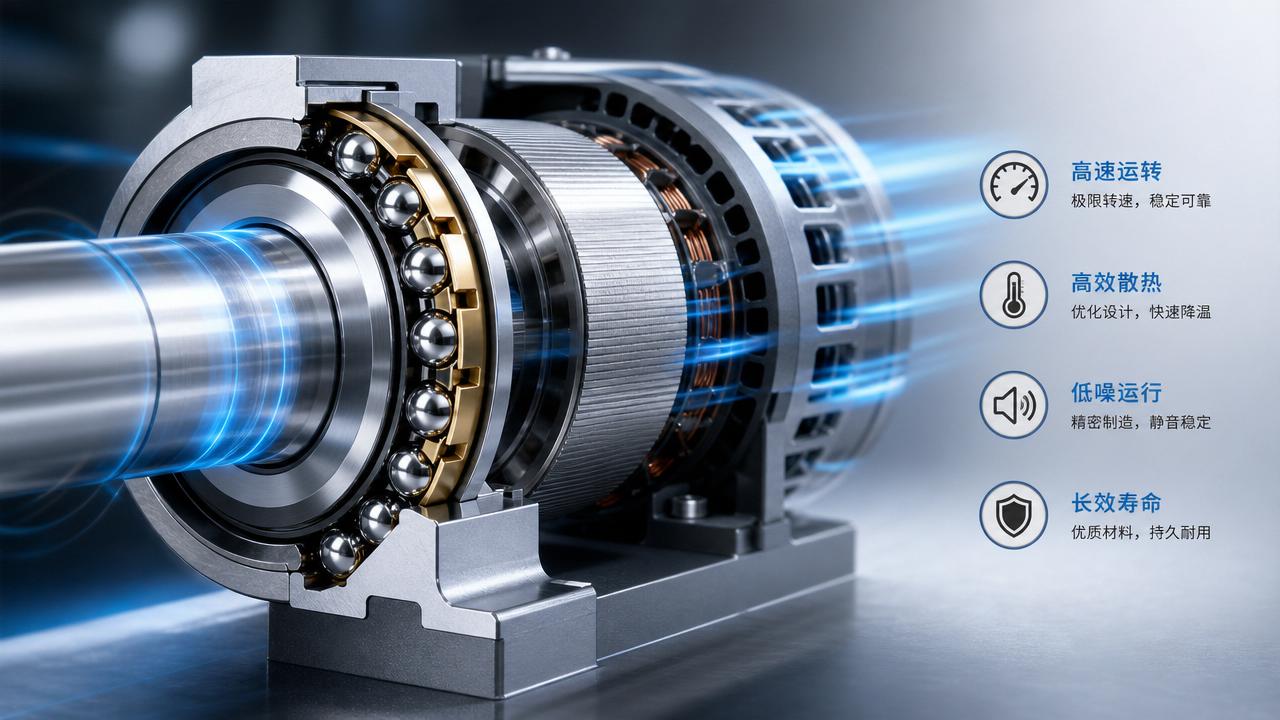
Deep groove ball bearing speed ratings are more than catalog numbers—they directly affect heat generation, service life, noise, and overall machine reliability. For engineers, buyers, and maintenance teams, understanding what these ratings really mean helps prevent premature failure and improves operating efficiency. This article explains the key factors behind speed ratings and how to choose the right bearing for demanding applications.
When users search for deep groove ball bearing speed ratings, they usually want a practical answer, not just a definition. They need to know whether a bearing can safely run at a target RPM, what limits that speed in real conditions, and how speed ratings affect cost, performance, and service life.
For most buyers and engineers, the key judgment is simple: a speed rating is not a promise that any bearing will run indefinitely at that number. It is a reference value based on bearing design, lubrication, load, precision, cage type, heat dissipation, and operating conditions.
That is why two bearings with the same dimensions may perform very differently at high speed. In actual applications, using the catalog rating without considering load, fit, sealing, grease selection, and shaft housing accuracy can lead to temperature rise, noise, lubricant breakdown, and early failure.
What Do Deep Groove Ball Bearing Speed Ratings Actually Tell You?
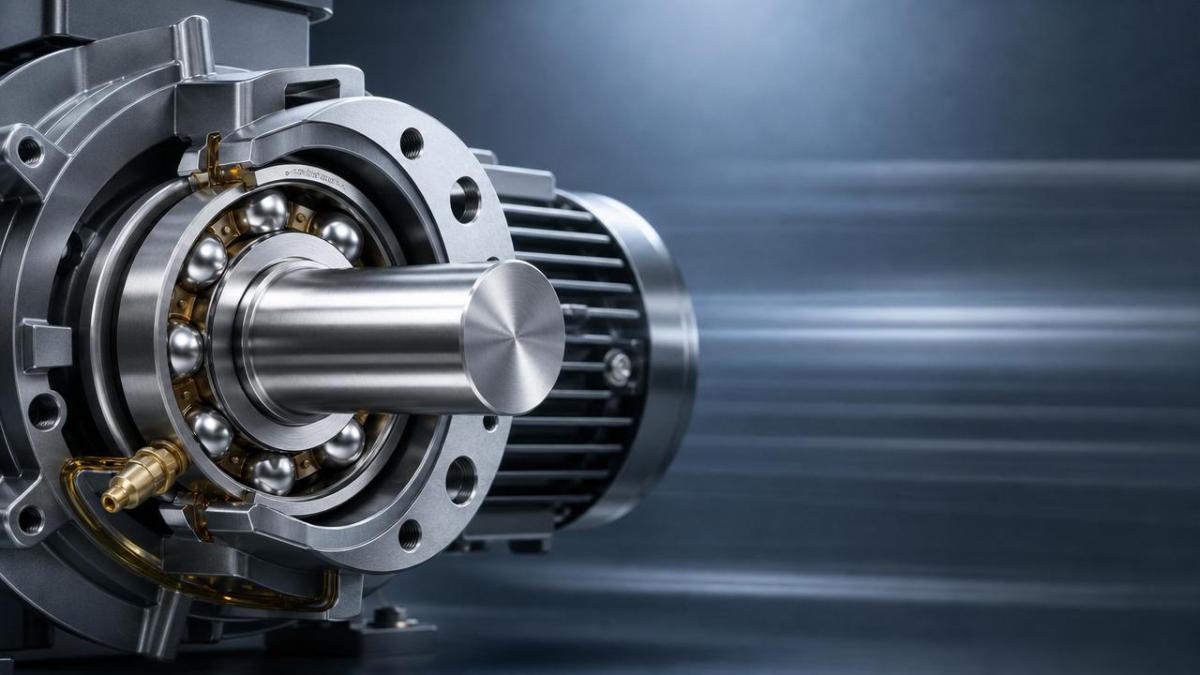
In practical terms, deep groove ball bearing speed ratings indicate the rotational speed range a bearing can handle under defined test or reference conditions. They help users compare products, but they do not replace application-based engineering judgment.
Most catalogs present a reference speed and, in some cases, a limiting speed. The reference speed usually reflects thermal behavior under standard operating conditions. The limiting speed often represents the upper mechanical threshold influenced by cage strength, lubrication capability, and stability.
For users evaluating deep groove ball bearing speed ratings, this distinction matters. A bearing may technically reach a limiting speed for short periods, but continuous operation near that level may require special lubrication, high precision mounting, and strict control of vibration and temperature.
In other words, speed ratings are best treated as engineering starting points. They help narrow selection options, but the final decision should always be based on the actual machine duty cycle, environment, and expected reliability target.
Why Speed Ratings Matter More Than Many Buyers Expect
Speed directly affects friction, and friction creates heat. As rotational speed increases, the bearing generates more heat at the contact surfaces, in the cage, and within the lubricant film. If heat cannot dissipate effectively, temperature rises quickly and performance declines.
Once temperature climbs too high, grease may lose viscosity, oil film thickness may decrease, and internal clearance may change. These shifts can increase noise, reduce accuracy, and accelerate wear on raceways and rolling elements.
For procurement teams, this means choosing only by dimension and price can be risky. A lower-cost bearing that cannot maintain stable thermal performance at operating speed may create much higher total costs through downtime, maintenance labor, and replacement frequency.
For maintenance teams, speed ratings also influence troubleshooting. Repeated overheating, grease leakage, or abnormal running sound often point to a mismatch between bearing capability and actual operating speed, especially in compact or poorly ventilated assemblies.
What Factors Determine the Real Speed Capability of a Bearing?
The catalog number is only the visible part of the story. Actual speed capability depends on multiple interacting factors, and overlooking even one of them can reduce performance significantly in service.
Lubrication is one of the biggest factors. Grease-lubricated bearings usually have lower practical speed limits than oil-lubricated versions because grease creates more churning resistance and releases heat less effectively at very high rotational speeds.
Bearing load also matters. Heavier radial or axial loads increase contact stress and friction, which raises temperature. A bearing that performs well at high speed under light load may behave very differently when the load increases or becomes uneven.
Cage design plays an important role as well. Different cage materials and structures affect guidance, friction, stability, and resistance to centrifugal force. For high-speed applications, cage selection can be just as important as raceway quality.
Precision grade influences speed capability because high-speed rotation magnifies small geometric errors. Better roundness, tighter tolerances, and smoother raceway finishing reduce vibration and heat generation, allowing more stable running at elevated RPM.
Internal clearance must also be correct. If clearance is too tight, friction and heat rise rapidly. If it is too loose, vibration, noise, and running instability may increase. The best clearance depends on fit, temperature growth, and operating conditions.
Seals and shields affect speed too. Contact seals provide better contamination protection, but they increase friction and usually reduce maximum speed potential. Shielded or open designs often support higher speed, though they may require cleaner environments.
Finally, shaft and housing accuracy should never be underestimated. Even a high-quality bearing will underperform if mounted on misaligned seats or poorly machined fits. High-speed applications demand system-level precision, not only good bearing quality.
Reference Speed vs. Limiting Speed: Why the Difference Matters
Many users confuse these two values, and that confusion can lead to poor bearing selection. Understanding the difference helps users avoid overestimating safe operating range and underestimating thermal risk.
Reference speed is mainly related to the bearing’s thermal equilibrium under standardized conditions. It offers a practical benchmark for continuous operation when lubrication and cooling are normal. In many cases, it is the more useful value for everyday engineering decisions.
Limiting speed is different. It reflects the mechanical ceiling under certain assumptions, often before instability, excessive centrifugal effects, or lubrication failure become critical. It is not automatically a recommended continuous working speed.
If a machine must operate close to or above reference speed for long periods, users should review lubricant type, preload or clearance, sealing configuration, shaft balance, and heat dissipation. Treating limiting speed as a routine working speed often shortens bearing life.
For buyers comparing suppliers, asking only for the highest speed rating is not enough. It is more useful to ask under what conditions the rating is established and what design measures support stable operation in the intended application.
How to Judge Whether a Bearing Speed Rating Fits Your Application
A practical selection process starts with the real operating RPM, but it should not end there. The correct question is not “What is the highest rated speed?” but “What speed can this bearing sustain reliably in my machine?”
First, define the operating profile. Is the machine running continuously, intermittently, or with frequent acceleration and deceleration? Short bursts at high speed place different demands on the bearing than constant operation over long shifts.
Second, confirm the actual load condition. Radial load, axial load, shock load, and load fluctuation all influence usable speed. A bearing selected for a light laboratory duty may not survive in a dusty industrial line at the same RPM.
Third, review the lubrication strategy. If the application requires high speed, users should evaluate grease type, fill quantity, relubrication interval, and whether oil lubrication would provide better thermal control and service life.
Fourth, assess the environment. Heat from adjacent components, airborne contamination, moisture, and insufficient cooling can all reduce real-world speed capability. The same bearing can perform very differently in a clean motor versus a harsh mill environment.
Fifth, consider reliability expectations. If failure causes production stoppage, safety risk, or expensive maintenance, the bearing should not be chosen at the edge of its rating. A conservative speed margin often delivers better lifecycle economics.
Common Mistakes When Interpreting Deep Groove Ball Bearing Speed Ratings
One common mistake is assuming all bearings of the same size share the same speed performance. In reality, internal design, material quality, cage type, lubrication recommendation, and manufacturing precision can create major differences.
Another mistake is ignoring heat build-up during operation. Some users focus only on starting performance or no-load RPM, but temperature rise under full operating conditions is often the true test of whether the bearing selection is correct.
A third mistake is choosing sealed bearings for contamination control without considering speed-related friction. In some cases, a shielded or optimized sealing solution may deliver a better balance between cleanliness and rotational performance.
Users also sometimes overfill grease, believing more lubricant means more protection. At high speed, excessive grease can increase churning, raise operating temperature, and reduce efficiency instead of improving reliability.
Finally, many failures blamed on bearing quality are actually system problems. Poor fit tolerances, shaft deflection, misalignment, unbalance, and weak housing rigidity can all make a properly rated bearing fail below its expected speed range.
What High-Speed Buyers Should Ask Suppliers Before Ordering
When sourcing bearings for demanding applications, buyers should go beyond dimensions and price lists. The right technical questions can quickly reveal whether a supplier understands high-speed performance or is only offering generic catalog claims.
Ask which speed value is being quoted and under what lubrication condition. A clear answer helps distinguish between marketing language and application-relevant data. It also makes supplier comparisons more meaningful.
Ask about cage material, precision grade, internal clearance options, and sealing configuration. These details strongly affect the real operating window and may explain why one product performs better than another at similar nominal size.
It is also helpful to ask about testing capability and quality control. Manufacturers with specialized bearing testing equipment, precision grinding processes, and experience across industries are often better positioned to support stable performance in high-speed use.
For users serving machine tools, automotive systems, wind power auxiliaries, or industrial transmission equipment, supplier application experience matters. A bearing company familiar with real industrial conditions can often recommend a more reliable configuration, not just a standard part number.
How a Reliable Manufacturer Supports Better Speed Performance
Speed capability is not created by catalog language alone. It comes from material quality, machining precision, heat treatment consistency, raceway finishing, inspection discipline, and the ability to match design details to actual service conditions.
Liaocheng Tianyue Bearing Co., Ltd., established in 2007, has built its business around bearing research, development, design, and production. With dedicated testing equipment and high-precision CNC grinding resources, the company supports the stable quality needed for demanding applications.
Its subsidiary, Anhui Luban Bearing Company, produces multiple bearing series, including deep groove ball bearings and self-aligning roller bearings. These products are applied across machine tools, steel mills, coal mines, automobiles, wind power, and other sectors where operating conditions vary widely.
That cross-industry experience is valuable because deep groove ball bearing speed ratings must always be understood in context. A supplier that works with diverse operating environments is often better able to advise on balancing speed, durability, noise, sealing, and cost.
For global buyers, consistent quality at competitive pricing also matters. When a manufacturer combines technical capability with broad market experience, users gain more confidence that the selected bearing will perform not only on paper, but in actual service.
Conclusion: Speed Ratings Are Useful, but Application Judgment Matters More
Deep groove ball bearing speed ratings are essential selection references, but they should never be interpreted as simple guaranteed operating numbers. They are influenced by lubrication, load, precision, cage design, sealing, installation quality, and heat control.
The most effective approach is to use speed ratings as a starting point, then check them against the real demands of the machine. That means looking at continuous RPM, load pattern, thermal conditions, lubrication method, contamination risk, and desired service life.
For engineers, buyers, and maintenance teams, the best decision is usually not the bearing with the highest listed number. It is the bearing that can run smoothly, stay cool, resist wear, and support reliable output in the actual application.
If you are evaluating deep groove ball bearing speed ratings for industrial use, a knowledgeable manufacturer can help translate catalog values into practical selection guidance. That is the difference between buying a bearing by specification and choosing one for long-term performance.

Thank you very much for writing to us. Please leave your message and contact information, we will reply to you within 24 hours.