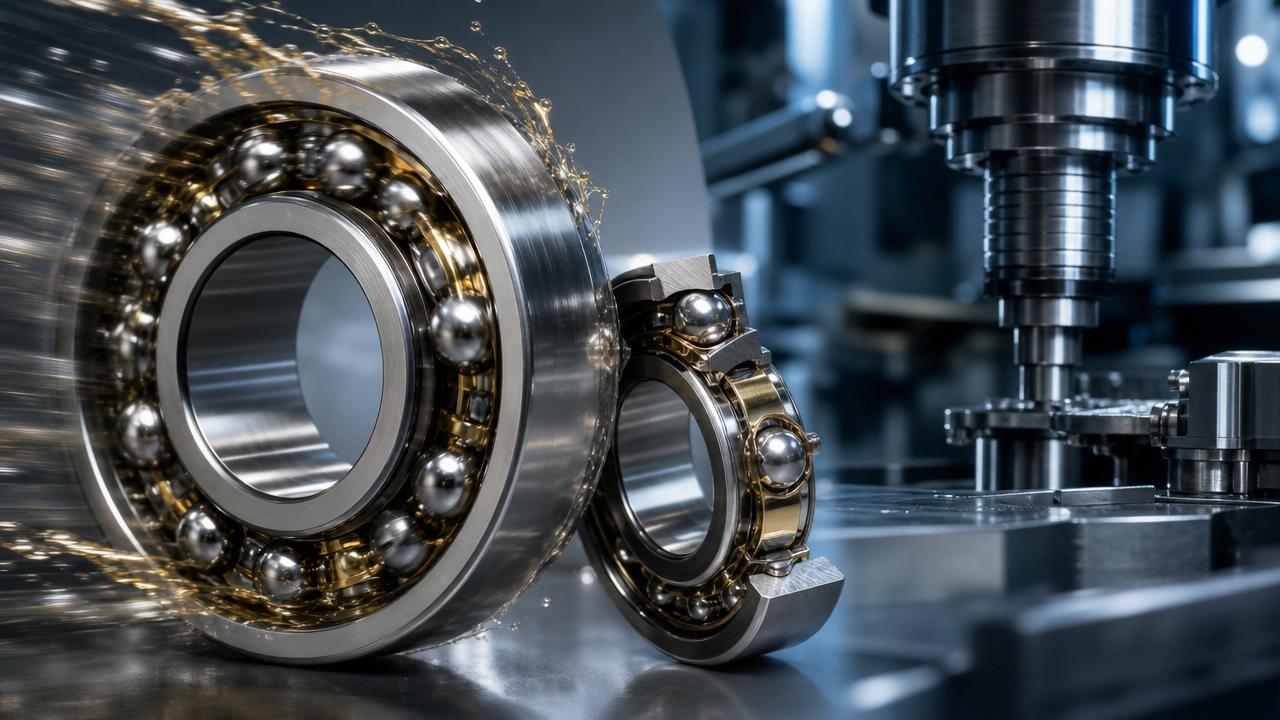
Understanding deep groove ball bearing speed ratings is essential for selecting the right bearing for high-efficiency, high-reliability applications. The speed limit of a deep groove ball bearing is determined by factors such as bearing design, load, lubrication, cage material, precision grade, and operating temperature. In this article, we explain how these variables interact and how manufacturers like Liaocheng Tianyue Bearing help ensure stable performance across demanding industrial environments.
What Do Deep Groove Ball Bearing Speed Ratings Really Mean?
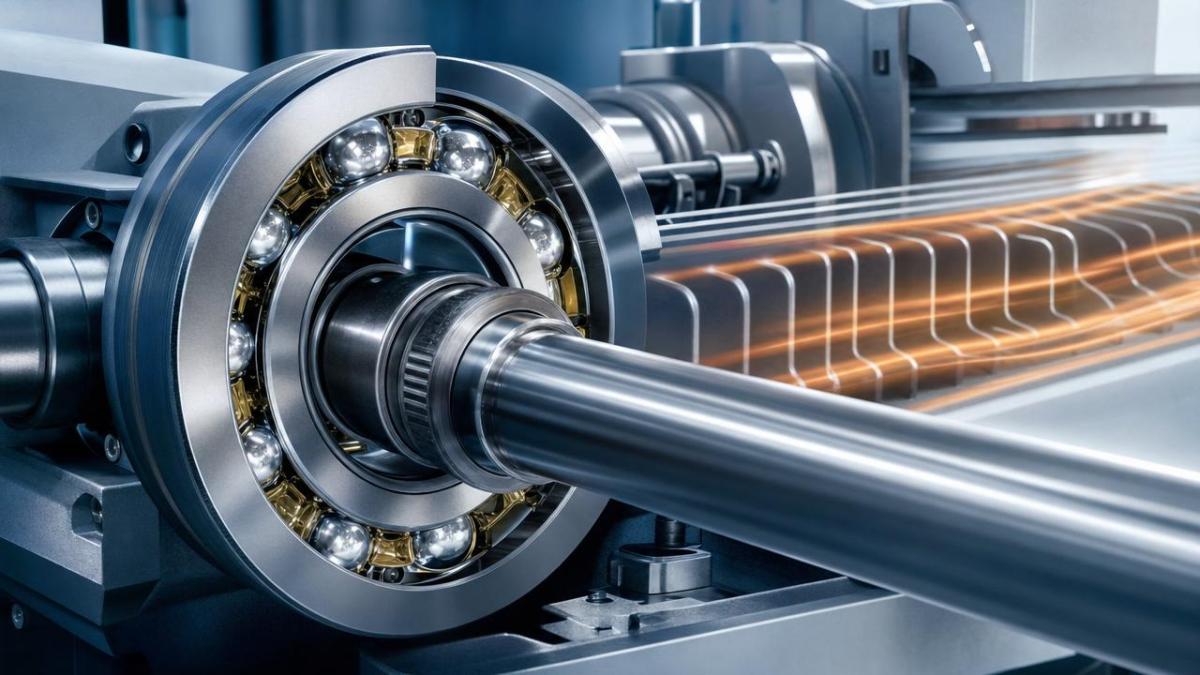
When buyers search for deep groove ball bearing speed ratings, they usually want a practical answer: how fast can a bearing safely run in real service without overheating, wearing out early, or failing unexpectedly.
The short answer is that the speed limit is not based on one dimension alone. It is determined by a combination of internal design, lubrication method, operating load, precision grade, cage structure, heat generation, and application conditions.
In catalogs, manufacturers often list reference speeds or limiting speeds. These figures are useful starting points, but they should never be treated as universal operating speeds for every machine or environment.
A bearing that performs well at a certain speed in a test environment may behave very differently in a dusty workshop, a hot gearbox, a machine tool spindle, or a heavily loaded conveyor system.
That is why engineers, purchasing managers, and maintenance teams need to understand not just the number in a catalog, but the logic behind how that number is determined.
Why Speed Limit Matters More Than Many Buyers Expect
For many industrial users, speed is closely tied to production efficiency. If the selected bearing cannot support the required rotational speed, the entire machine may suffer from rising temperatures, vibration, noise, and reduced service life.
In practical terms, an unsuitable bearing speed rating can create hidden costs. These include unexpected downtime, more frequent lubrication, unstable product quality, and repeated replacement expenses that far exceed the original bearing purchase price.
For business decision-makers, the issue is not only whether a bearing can rotate fast once, but whether it can maintain stable performance over time under actual working conditions.
This is especially important in sectors such as machine tools, automotive systems, steel processing, coal mining, and wind power equipment, where reliability directly affects output, maintenance cycles, and operating safety.
The Main Factors That Determine the Speed Limit of a Deep Groove Ball Bearing
The speed capability of a deep groove ball bearing is fundamentally linked to friction and heat. The higher the speed, the more important it becomes to control internal friction, lubrication film stability, and temperature rise.
Several key factors work together to determine the final speed rating. Understanding these factors helps users compare products more accurately and avoid making decisions based only on size or price.
Bearing Design and Internal Geometry
The internal design of the bearing has a direct influence on speed performance. Raceway geometry, internal clearance, ball size, and contact conditions all affect friction, load distribution, and heat generation during rotation.
A deep groove ball bearing designed for smooth high-speed operation usually has optimized internal geometry that reduces unnecessary contact stress while maintaining stable running accuracy at elevated rotational speeds.
Load Conditions
Load is one of the most important real-world limits on bearing speed. Even if a bearing catalog shows a high limiting speed, that value generally assumes relatively favorable loading conditions.
As radial or axial load increases, internal contact pressure rises. This leads to more friction, more heat, and a greater chance of lubricant breakdown. In many applications, the practical speed limit drops significantly under heavier loads.
This is why users should never evaluate deep groove ball bearing speed ratings without also considering the expected load profile, including start-stop cycles, shock loads, and load fluctuations.
Lubrication Type and Lubricant Quality
Lubrication plays a critical role in determining how fast a bearing can run. Proper lubrication reduces metal-to-metal contact, dissipates heat, and supports stable operation across a wide range of speeds.
Grease-lubricated bearings are convenient and widely used, but they often have lower speed capability than oil-lubricated bearings. Oil lubrication generally removes heat more effectively and is often preferred in higher-speed applications.
The lubricant itself also matters. Viscosity, consistency, oxidation resistance, and temperature performance all influence whether the lubricant can maintain a stable protective film at operating speed.
Cage Material and Cage Design
The cage guides and separates the rolling elements, and its design becomes increasingly important as speed rises. Poor cage performance can lead to instability, extra friction, or even premature failure at high rotational speeds.
Different cage materials, such as pressed steel, machined brass, or engineering polymers, offer different advantages. The best option depends on speed, temperature, lubrication, and the overall operating environment.
In many high-speed applications, a carefully matched cage design can make a meaningful difference in noise control, running smoothness, and long-term reliability.
Precision Grade and Manufacturing Quality
Higher precision usually supports better speed performance. Bearings manufactured to tighter tolerances tend to run more smoothly, with less vibration and better rotational accuracy.
Surface finish quality, raceway consistency, ball grading, and dimensional accuracy all affect friction behavior. Even a well-designed bearing may struggle at higher speed if manufacturing quality is inconsistent.
This is one reason why experienced industrial buyers often focus not only on specification sheets, but also on process control, testing capability, and supplier manufacturing standards.
Operating Temperature and Heat Dissipation
Speed generates heat, and heat changes everything. As temperature rises, lubricant properties shift, internal clearance changes, and the risk of accelerated wear increases.
A bearing can only sustain high speed if the system can dissipate heat effectively. Housing design, shaft fit, airflow, lubrication circulation, and ambient temperature all influence thermal balance.
In real applications, the speed limit is often the point at which heat generation begins to exceed the system’s ability to manage temperature safely over time.
Reference Speed vs. Limiting Speed: A Difference Buyers Should Understand
Many users confuse reference speed with limiting speed, but the distinction is important when comparing deep groove ball bearing speed ratings across suppliers or product series.
Reference speed generally reflects a thermal benchmark under defined operating conditions. It provides a comparative value for estimating how fast a bearing may run when heat generation and heat dissipation are balanced.
Limiting speed is usually the maximum permissible speed based on mechanical constraints, cage strength, lubrication conditions, and operating stability. It is often the upper boundary, not the recommended continuous operating point.
For practical selection, users should treat both values as engineering guidance rather than fixed guarantees. Final decisions should account for application-specific factors that may reduce the safe operating speed.
How to Judge Whether a Catalog Speed Rating Fits Your Application
If you are selecting a bearing for a real machine, the right question is not simply, “What is the rated speed?” The better question is, “Can this bearing maintain stable performance at my required speed under my actual conditions?”
Start by reviewing shaft speed, radial load, axial load, lubrication method, working temperature, and expected duty cycle. These factors often determine whether the catalog value is realistic for your equipment.
Next, consider your operating environment. Dust, moisture, vibration, contamination, and limited cooling capacity can all reduce the effective speed capability of a bearing, even when the nominal rating appears sufficient.
It is also wise to build in a safety margin. Running continuously near the theoretical maximum speed may increase maintenance risk, especially in applications where downtime is costly.
For high-speed or critical-duty systems, users should consult the bearing manufacturer for selection support rather than relying only on standard tables.
Common Mistakes When Evaluating Deep Groove Ball Bearing Speed Ratings
One common mistake is choosing a bearing based only on bore size and outside diameter while ignoring the operating speed, lubrication condition, and heat control requirements.
Another frequent issue is assuming all bearings of the same dimensions have the same speed performance. In reality, cage material, precision grade, internal design, and manufacturing consistency can create significant differences.
Some buyers also overlook the effect of installation quality. Improper fits, shaft misalignment, excessive preload, or contamination during assembly may reduce speed performance even when the bearing itself is well designed.
Finally, users sometimes treat the maximum listed speed as a normal operating target. This can shorten bearing life and increase system instability, especially in continuous-duty industrial applications.
How a Reliable Manufacturer Supports Better High-Speed Bearing Performance
The true value of a bearing supplier is not limited to providing a product number. A capable manufacturer helps customers match bearing performance to real operating demands, especially when speed and reliability are both critical.
Liaocheng Tianyue Bearing Co., Ltd., established in 2007, integrates bearing research, development, design, and production. Its technical strength and specialized testing capabilities help support consistent product performance across diverse industrial applications.
With advanced bearing testing equipment and high-precision CNC grinding machines, the company builds a strong manufacturing foundation for quality control, dimensional accuracy, and stable running characteristics.
Its subsidiary, Anhui Luban Bearing Company, produces various bearing series, including deep groove ball bearings and self-aligning roller bearings used in machine tools, steel mills, coal mines, automobiles, and wind power systems.
For buyers concerned about balancing performance and cost, this matters. Imported-grade quality at competitive pricing can improve purchasing efficiency while reducing the long-term risks associated with inconsistent bearing quality.
For customers in domestic and international markets, supplier responsiveness, manufacturing discipline, and industry experience often play a major role in whether the selected bearing truly meets speed and service life expectations.
Practical Selection Advice for Buyers, Engineers, and Maintenance Teams
If your application involves moderate speed and standard loads, a conventional deep groove ball bearing with appropriate grease lubrication may be fully sufficient and cost-effective.
If the application involves higher speed, elevated temperature, continuous duty, or strict vibration control, you should pay closer attention to lubrication method, cage design, precision grade, and thermal management.
When comparing suppliers, ask specific questions. What testing methods are used to validate speed performance? What precision grades are available? What lubrication recommendations apply to your operating range?
You should also request support on fit tolerance, clearance selection, and installation conditions. These details often determine whether the bearing can achieve its rated speed in actual service.
In short, the best bearing is not always the one with the highest listed number. It is the one that delivers stable, efficient, and economical performance in your exact application.
Conclusion
The speed limit of a deep groove ball bearing is determined by a combination of design, load, lubrication, cage structure, precision, and temperature control. No single catalog figure can fully represent real operating capability.
For users searching deep groove ball bearing speed ratings, the most important takeaway is clear: evaluate the rating in context, not in isolation. A bearing’s real value lies in stable long-term performance, not just maximum theoretical speed.
By working with experienced manufacturers such as Liaocheng Tianyue Bearing and by assessing application conditions carefully, buyers can make better decisions, reduce operating risk, and improve equipment reliability over the full service life.

Thank you very much for writing to us. Please leave your message and contact information, we will reply to you within 24 hours.