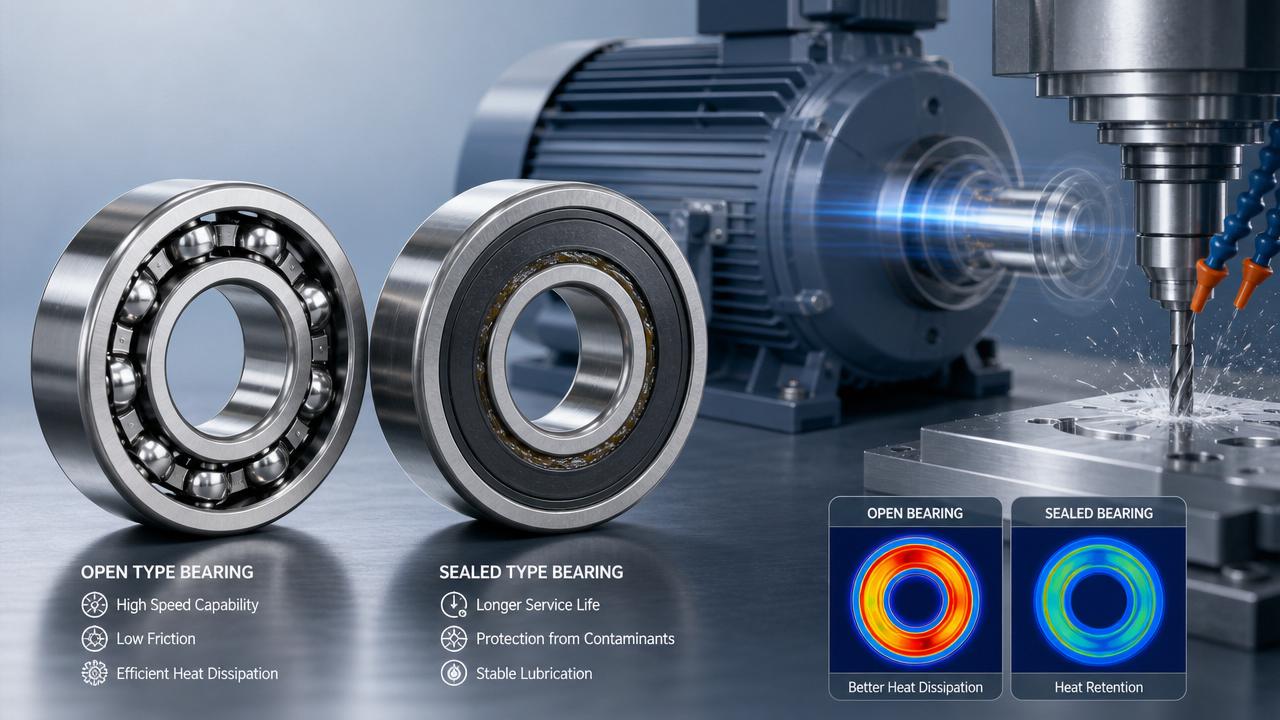
Why can two bearings that look nearly identical perform so differently at high speed? Understanding deep groove ball bearing speed ratings is essential for selecting the right bearing for machine tools, motors, automotive systems, and other demanding applications. In this article, we explore the key factors behind speed differences and how quality design, materials, lubrication, and manufacturing precision affect real-world performance.
Why do similar deep groove ball bearings show different speed ratings?
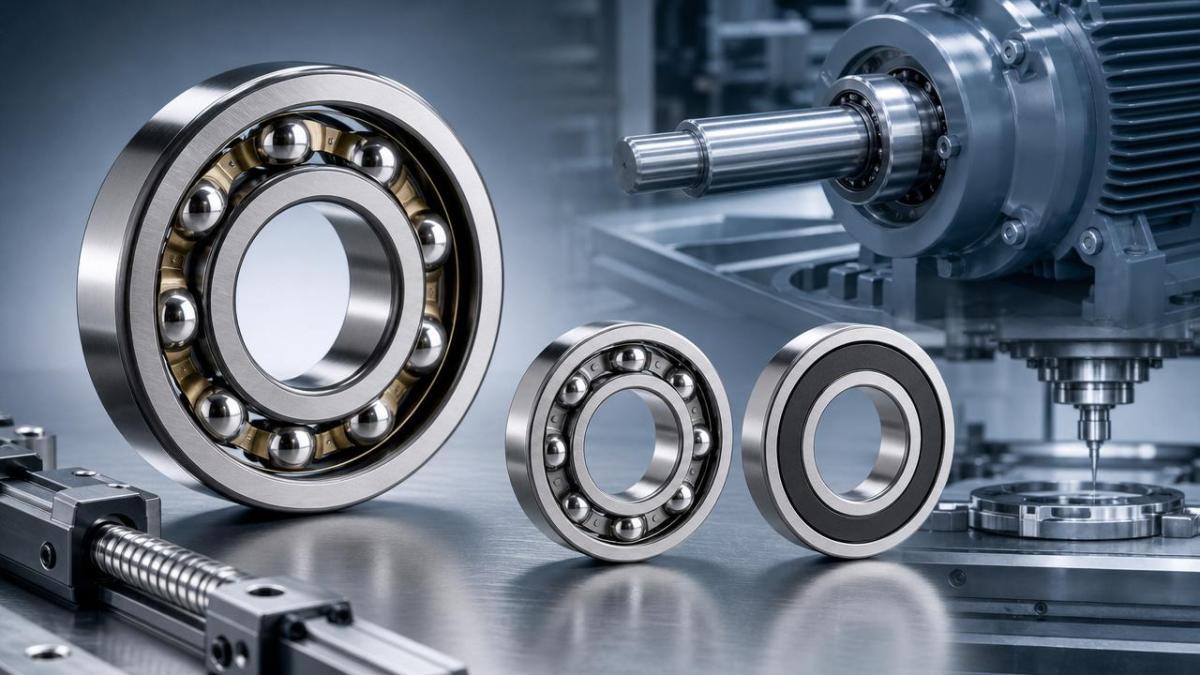
Many buyers assume that if two bearings share the same boundary dimensions, they should also deliver the same rotational speed. In practice, deep groove ball bearing speed ratings depend on far more than size alone.
Speed capability is influenced by internal geometry, cage design, material cleanliness, raceway finishing, radial clearance, lubricant type, seal contact, and the precision of manufacturing. Even small differences in these factors can raise friction, heat generation, and vibration.
That is why two products marked with the same basic bearing number may receive different catalog speed limits from different manufacturers, or even from different design variants made for open, shielded, or sealed service.
- Open bearings usually allow higher speed because they create less friction than contact-sealed designs.
- Grease-filled bearings may have lower speed limits than oil-lubricated ones, especially in continuous high-speed duty.
- Higher precision raceway grinding can reduce temperature rise and improve stable running at elevated RPM.
Speed rating is not just a catalog number
The published speed rating is usually a practical operating reference under defined lubrication, load, mounting, and cooling conditions. It is not a universal guarantee that every machine can safely run at that speed without reviewing the full working environment.
For procurement teams, this matters because selecting only by bearing code can lead to overheating, short grease life, noise issues, or premature failure when the application includes high RPM, vertical mounting, contamination, or fluctuating loads.
Which technical factors most strongly affect deep groove ball bearing speed ratings?
When engineers compare deep groove ball bearing speed ratings, they should focus on the internal elements that govern friction and thermal balance. The table below summarizes the most important variables and their effect on speed performance.
This comparison shows that deep groove ball bearing speed ratings are the result of system design, not a single material upgrade or marketing label. Buyers should request technical confirmation when speed is a critical selection condition.
Why lubrication often creates the biggest difference
Lubrication is one of the most underestimated variables. A bearing with good steel and precision grinding may still perform poorly if the grease has excessive base oil viscosity, poor shear stability, or unsuitable fill quantity for high-speed service.
Too much grease raises churning losses and temperature. Too little grease reduces film strength and can accelerate wear. In high-speed motor or spindle-related applications, this balance directly limits the practical speed ceiling.
How seals change friction and speed
A contact rubber seal protects against dust and moisture, which is valuable in mining, automotive, and dirty industrial environments. However, the seal lip touches the inner ring and adds running torque, which lowers speed ratings compared with open or metal-shielded designs.
This is why application context matters. The highest speed rating is not always the best choice if contamination control is more important than maximum RPM.
How should buyers compare bearings for machine tools, motors, and automotive use?
Different industries place different demands on deep groove ball bearing speed ratings. A machine tool spindle support position, an electric motor, and an automotive accessory drive may all use similar bearing sizes but require different optimization priorities.
The table below helps purchasing and engineering teams match operating conditions with the right bearing design direction instead of comparing only unit price.
The right bearing is the one that fits the operating envelope. A catalog speed rating should be evaluated together with contamination level, duty cycle, ambient temperature, mounting structure, and maintenance capability.
Common buying mistakes in high-speed bearing selection
- Choosing the highest nominal speed rating without checking whether the machine uses grease or oil lubrication.
- Ignoring shaft and housing fits, which can reduce internal clearance after installation and increase heat.
- Comparing only outer dimensions and not reviewing precision grade, seal type, or cage structure.
- Assuming all suppliers define speed ratings under identical testing and operating assumptions.
What should you check before purchasing a high-speed deep groove ball bearing?
If your project involves strict speed, noise, or service life targets, a structured evaluation process helps avoid rework and unplanned downtime. This is especially important when replacement space is fixed but operating demands are increasing.
A practical selection checklist
- Confirm actual operating speed, not only rated motor speed. Include startup peaks, overspeed events, and continuous duty time.
- Identify load direction and magnitude. Combined radial and axial loads can change temperature and running behavior.
- Review lubrication strategy. Specify grease type, fill ratio, relubrication interval, or oil circulation conditions.
- Check environment. Dust, moisture, heat, and vibration may justify a lower-speed sealed design for better total reliability.
- Ask for consistency in manufacturing and inspection, especially for large-volume procurement or export-oriented equipment assembly.
Why manufacturing capability matters
Deep groove ball bearing speed ratings are closely tied to process control. High-precision CNC grinding, specialized inspection equipment, and stable quality management support better raceway geometry, lower vibration, and more consistent thermal behavior across batches.
For this reason, supplier capability is not a background detail. It directly affects whether catalog performance can be reproduced in volume production, especially in machine tools, automotive components, wind power support systems, and other demanding industrial uses.
How can a reliable bearing supplier reduce speed-related risk?
Working with a manufacturer that combines research, design, production, and testing can shorten the gap between theoretical selection and actual operating reliability. This is valuable when buyers need guidance on balancing speed, sealing, life, noise, and cost.
Liaocheng Tianyue Bearing Co., Ltd., established in 2007, has developed its operations around bearing research and development, design, and production. With advanced specialized testing equipment and high-precision CNC grinding machines, the company is positioned to support stable product quality for industrial applications where consistency matters.
Its subsidiary, Anhui Luban Bearing Company, focuses on multiple bearing series, including deep groove ball bearings and self-aligning roller bearings. These products are used in machine tools, steel mills, coal mines, automobiles, wind power, and other sectors where operating conditions can vary widely.
For buyers, this means supplier discussions can go beyond basic dimensions. They can include application matching, speed rating expectations, lubrication advice, sealing selection, and delivery planning based on the real use environment.
What procurement teams usually want clarified
- Whether a sealed or shielded variant is better for the target RPM and contamination level.
- Whether internal clearance should be standard or adjusted for thermal expansion and fit conditions.
- Whether a competitive-price alternative can still meet required speed and service expectations.
- How production and logistics can support urgent delivery schedules for domestic or export projects.
FAQ: common questions about deep groove ball bearing speed ratings
Can two bearings with the same model number have different speed ratings?
Yes. The same basic size code does not guarantee the same internal design, seal type, cage structure, lubricant, or precision level. These differences can materially change friction and heat generation, which directly affect deep groove ball bearing speed ratings.
Are open bearings always better for high speed?
Open bearings often allow higher rotational speed because they avoid seal contact friction. However, if the environment contains dust, moisture, or metal particles, contamination may shorten life more severely than the speed advantage helps. Selection should follow application risk, not RPM alone.
How important is grease selection for speed performance?
It is critical. Grease type, viscosity, thickener system, and fill amount all influence operating temperature and torque. An unsuitable grease can lower practical speed capability even when the bearing itself is manufactured to a high standard.
What should I provide when asking for bearing selection support?
Prepare the shaft speed, load condition, mounting orientation, operating temperature, sealing requirement, lubrication method, working environment, expected service life, and preferred delivery schedule. This information allows suppliers to give more accurate recommendations than model number matching alone.
Why choose us for deep groove ball bearing selection and supply?
When deep groove ball bearing speed ratings affect equipment reliability, procurement teams need more than a quotation. They need support that connects bearing structure, operating conditions, manufacturing consistency, and delivery execution.
Liaocheng Tianyue Bearing Co., Ltd. combines bearing R&D, design, and production capabilities with specialized testing equipment and high-precision CNC grinding resources. This foundation helps customers evaluate not only size compatibility, but also speed suitability, seal choice, lubrication direction, and cost-performance balance.
If you are comparing deep groove ball bearing speed ratings for motors, machine tools, automotive systems, steel mill equipment, coal mine machinery, or wind power applications, you can contact us to discuss specific technical and commercial details.
- Parameter confirmation for speed, load, clearance, seal type, and lubrication conditions.
- Product selection support for open, shielded, or sealed deep groove ball bearing solutions.
- Lead time communication for regular supply, urgent demand, or export-oriented orders.
- Sample discussion for application verification before batch purchasing.
- Quotation exchange based on performance targets, budget range, and usage environment.
A bearing that looks similar on paper may behave very differently in service. The right next step is to review your working conditions in detail and match them with a bearing design built for the speed, environment, and reliability level your equipment actually requires.

Thank you very much for writing to us. Please leave your message and contact information, we will reply to you within 24 hours.