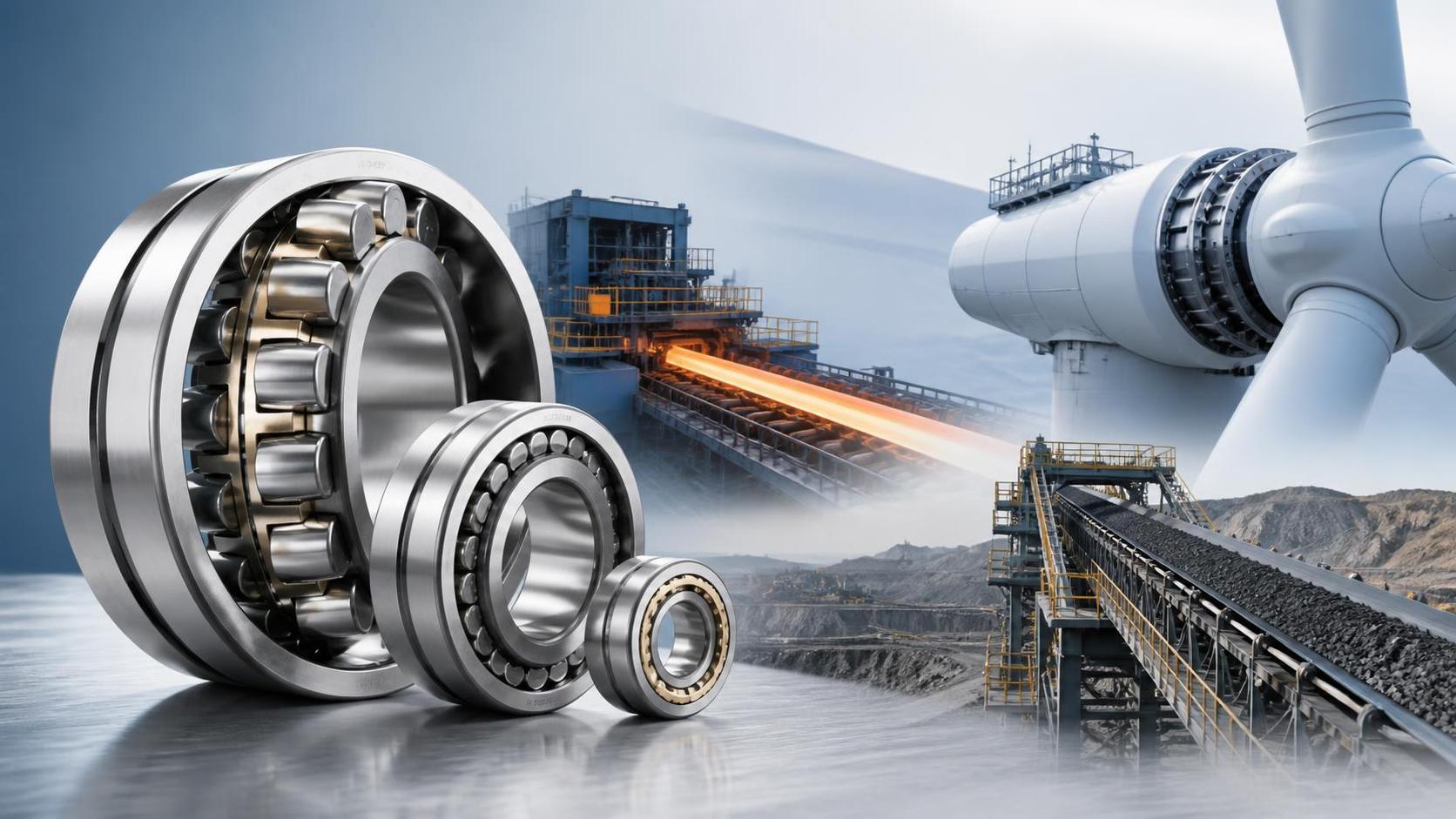
Self-Aligning Roller Bearing is most often used in steel mills, mining equipment, wind power systems, paper machinery, and heavy-duty industrial drives. These industries share the same operating problem: high load, misalignment, vibration, and limited tolerance for downtime.
For readers comparing application scenarios, the key point is simple. This bearing type is chosen when equipment must stay stable under harsh conditions and when shaft deflection or mounting error cannot be fully avoided. In practice, that makes it valuable in heavy industry, energy, and high-load rotating machinery.
Which industries rely on it most?
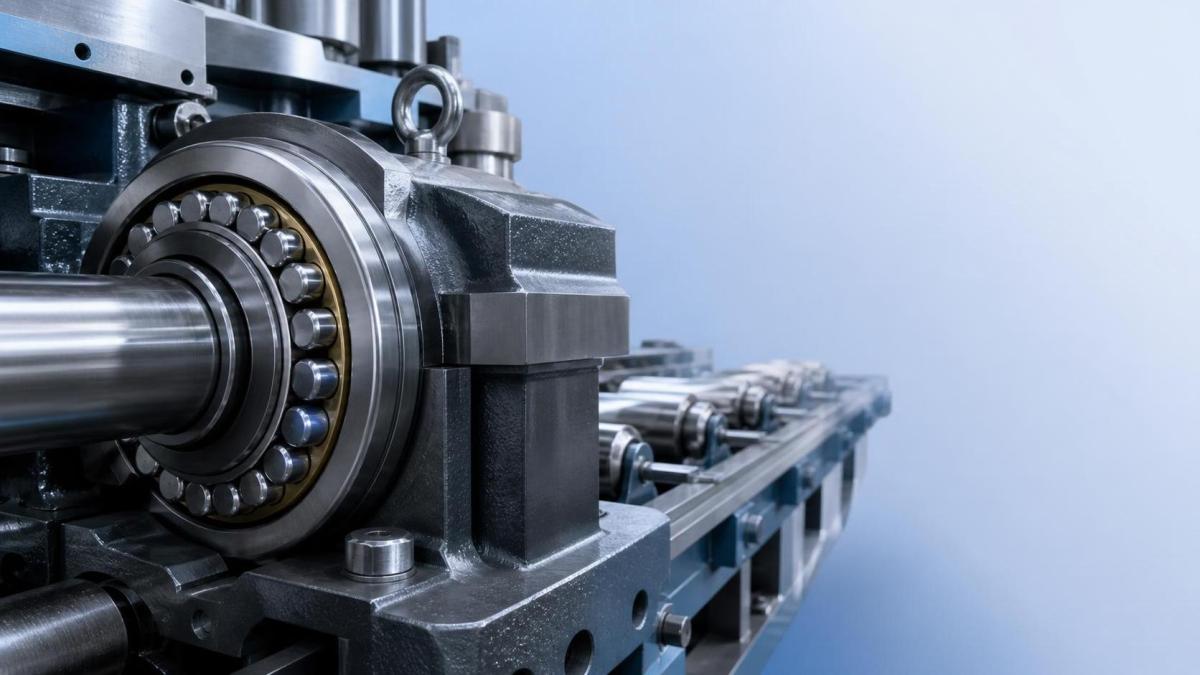
Steel mills are among the most common users because rolling lines, continuous casters, and conveyor systems face shock loads, heat, and alignment drift. Self-aligning roller bearings help reduce edge stress and support long operating cycles.
Mining is another major field. Crushers, vibrating screens, conveyors, and hoisting systems often run in dusty, wet, and unstable environments. Bearings must absorb load changes while still tolerating misalignment and contamination risk.
Wind power systems also depend on this bearing type, especially in main shafts and gear-related assemblies. Large wind turbines work under variable wind loads, so the bearing must handle dynamic force changes and installation deviation.
Why do these industries choose this bearing?
The main reason is load capacity. Self-aligning roller bearings are built to carry heavy radial loads while maintaining reliable rotation under uneven force distribution. That matters in equipment that cannot afford sudden failures.
The second reason is self-alignment. In real production, perfect shaft alignment is difficult to maintain. Thermal expansion, foundation settling, and assembly variation all create small deviations, and this bearing design helps compensate for them.
The third reason is service life. When bearing stress is distributed more evenly, equipment typically runs more smoothly and experiences less premature wear. For plants that measure cost by uptime, that advantage is practical, not theoretical.
Machine tools and automation systems may not seem as obvious as steel or mining, but they also use these bearings in heavier spindles, support rolls, and transmission units. The benefit is stable performance under continuous precision demands.
What should buyers evaluate before choosing?
Start with the actual load profile. Radial load, shock load, rotational speed, and temperature all affect selection. A bearing that works well in a low-speed conveyor may not fit a high-speed machine tool.
Next, check the alignment condition. If the shaft system regularly shifts or the housing structure is difficult to keep centered, a self-aligning roller bearing is usually a better fit than a rigid design.
Lubrication and sealing also matter. In steel mills or mining equipment, poor lubrication can shorten bearing life fast. Buyers should confirm whether the operating environment needs stronger sealing, more frequent relubrication, or a different cage material.
Finally, consider maintenance strategy. Some industries value maximum load capacity, while others prioritize easier replacement and predictable inspection intervals. The right choice depends on whether the goal is peak durability, lower maintenance cost, or both.
Common applications by industry
In steel production, these bearings are used in rolling mills, guide rolls, and heavy conveyor systems. In mining, they appear in crushers, vibrating screens, and material handling equipment.
In wind power, they support large rotating assemblies that face changing loads and long service intervals. In automotive manufacturing, they can be found in heavy conveyors, presses, and certain drivetrain-related machines.
Paper machinery, cement plants, and industrial gear units also use them when the operating environment combines vibration, misalignment, and continuous duty cycles. These are exactly the conditions where the bearing’s design is most useful.
How this affects business decisions
For procurement teams, the question is not only whether the bearing fits technically, but whether it reduces operating risk. A bearing that survives longer under misalignment can lower unplanned downtime, spare part consumption, and maintenance pressure.
For plant managers, the value shows up in consistency. Stable bearing performance supports smoother production, fewer emergency interventions, and better overall equipment availability.
For engineers, the decision usually comes down to matching the bearing to the machine’s real duty cycle. The best choice is not the one with the highest specification on paper, but the one that fits the actual working environment.
Self-aligning roller bearing is most often used where heavy load and alignment problems meet. That is why steel mills, mining, wind power, machine tools, and related industrial systems rely on it so heavily. If your equipment works under harsh conditions, this bearing type is worth serious consideration because it improves stability, extends service life, and supports lower downtime over time.

Thank you very much for writing to us. Please leave your message and contact information, we will reply to you within 24 hours.