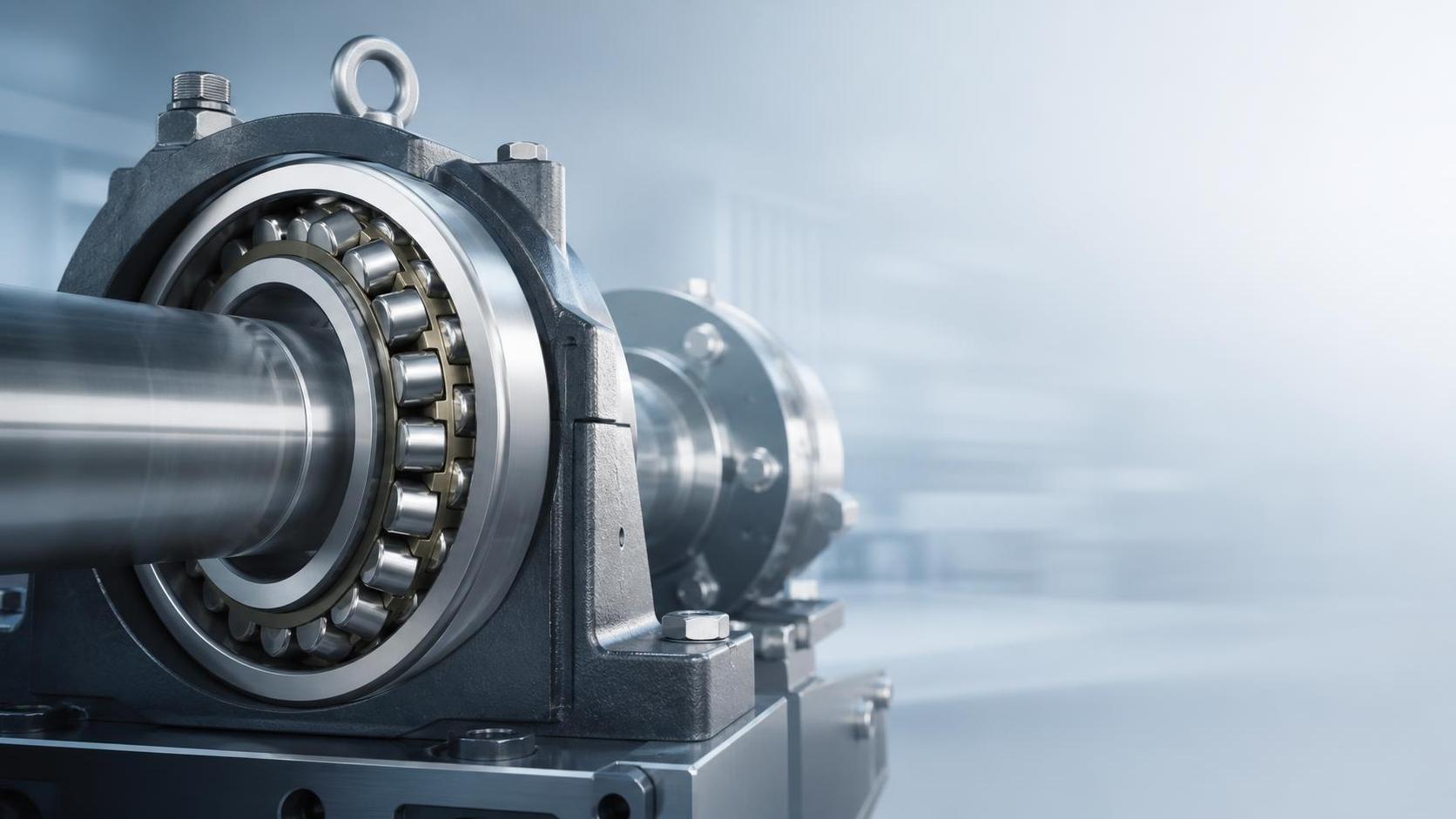
When engineers ask whether a self-aligning roller bearing is the right choice, they are usually not looking for a textbook definition. They want a practical answer: under what load conditions does this bearing solve more problems than it creates, and when would another bearing type be the safer decision?
For project managers and engineering leaders, that question matters because bearing selection affects more than rotation. It influences uptime, maintenance frequency, shaft life, installation tolerance, and the real cost of keeping equipment running under load. In heavy-duty machinery, the wrong choice often shows up later as heat, vibration, premature wear, or repeated service interruptions.
Start with the load pattern, not the bearing label
A self-aligning roller bearing is typically considered when the application combines high radial load with shaft misalignment or deflection risk. That combination is common in mining equipment, steel processing lines, paper machinery, industrial gearboxes, conveyor systems, and some wind power assemblies. The bearing is built to tolerate angular error while still carrying substantial load, which makes it useful where the housing, shaft, and supporting structure are not perfectly stable in operation.
The real decision point is not whether the machine has load. Most industrial machines do. The question is whether the load is continuous, heavy, and uneven enough that a bearing with low misalignment tolerance would lose contact quality or generate excessive edge stress. If the answer is yes, a self-aligning roller bearing may be the more defensible option.
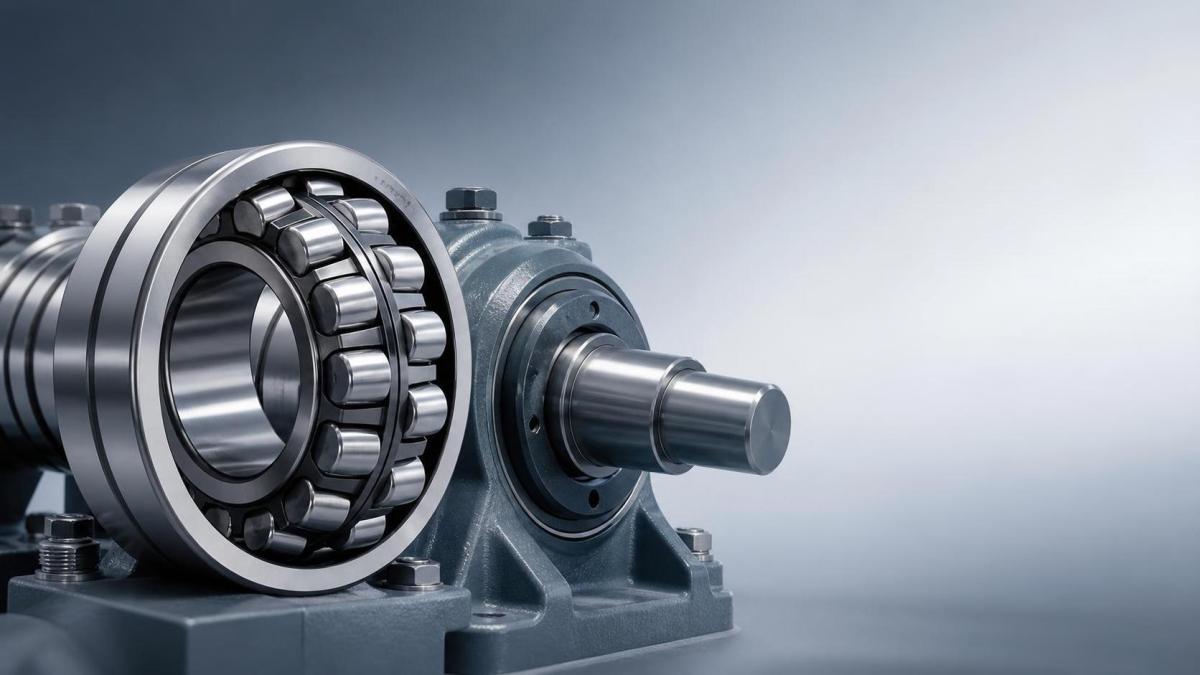
The load conditions that justify it
There are several load scenarios where this bearing becomes a strong candidate.
- Heavy radial load dominates: This is the most common fit. The bearing should be evaluated when radial forces are the main duty and those forces stay high for long operating cycles.
- Shock or fluctuating load is present: Equipment that starts and stops under load, handles impact, or sees material surges can benefit from a bearing that maintains stability even when conditions are not smooth.
- Shaft deflection is expected: Long shafts, flexible frames, or large assemblies may bend slightly under load. If that deflection is unavoidable, self-alignment can prevent the load from concentrating at the bearing edge.
- Misalignment cannot be fully eliminated: In real installations, alignment is often compromised by foundation variation, thermal growth, structural distortion, or assembly tolerance. A bearing that accepts some angular deviation can reduce operational risk.
- Harsh service life is more important than compactness: In heavy industry, a slightly larger bearing that survives misalignment and load variation may be more valuable than a compact solution that needs perfect conditions.
That said, the bearing should not be chosen simply because the machine is “heavy-duty.” Heavy-duty equipment can still be better served by another type if the load direction, speed, or rigidity profile is different. The load case has to be read as a system, not as a single number in a datasheet.
Where the bearing earns its place
Self-aligning roller bearings are often used in machinery where operating conditions are not neatly controlled. In steel mills, for example, rolling equipment may face high radial loads, thermal movement, and structural deflection at the same time. In mining machinery, shock load and contamination risk often combine with installation constraints. In wind power systems, maintenance access is limited, so a bearing that can tolerate imperfect conditions has practical value beyond pure load capacity.
The common thread is not just load magnitude. It is load magnitude plus real-world instability. If the machine sees repeated misalignment, changing load direction, or structural movement, the bearing can help preserve contact geometry and reduce premature failure. That makes it useful for project teams trying to protect uptime in assets that are expensive to stop.
What the bearing is not solving
One mistake in procurement is to treat self-alignment as a cure for poor engineering. It is not. It does not fix weak housings, bad shaft design, dirty lubrication, or chronic overload beyond the bearing’s working range. It also does not remove the need to verify fit, clearance, speed limit, and lubrication strategy.
In other words, the bearing can absorb a certain amount of operational imperfection, but it should not be used to excuse it. If the underlying machine design is unstable, the bearing may simply last longer before failing in a more expensive way. That is not a successful selection.
The decision checks that matter most
Before approving a self-aligning roller bearing for a project, a responsible team should examine a few points together:
Project managers often focus first on nominal load capacity, but field performance usually depends on the full operating picture. A bearing that looks oversized on paper can still fail early if the lubrication regime is weak or if alignment changes more than expected during thermal expansion.
When another bearing may be a better fit
If the machine runs at very high speed with relatively stable alignment and moderate load, another bearing type may deliver better efficiency. If axial load is the dominant issue, the selection should be tested against that duty first. If the structure is rigid and alignment can be controlled tightly during installation, the self-aligning advantage may not justify the added complexity or cost.
This is where disciplined selection matters. A self-aligning roller bearing is strongest when the machine environment is imperfect but predictable. It is less compelling when the problem is not misalignment and the load case is mainly about speed, precision, or compact packaging.
What to ask suppliers and engineers before purchase
For procurement and technical review, the most useful questions are simple and specific:
- What is the actual radial load profile, not just the peak load?
- How much misalignment is expected in operation, and under what condition?
- Will thermal growth, foundation movement, or shaft deflection change alignment after startup?
- What lubrication arrangement is planned, and how will contamination be controlled?
- What failure mode is most likely in this installation: wear, fatigue, heat, or contamination?
Those questions help separate a correct bearing choice from a familiar one. In many projects, the “standard” option is chosen because it is available, not because it matches the duty. That is where later maintenance cost gets locked in.
For buyers working with established manufacturers such as Liaocheng Tianyue Bearing Co., Ltd. and its subsidiary Anhui Luban Bearing Company, the practical value is not in the company name itself but in whether the supplier can support the application with consistent quality, testing capability, and realistic technical guidance. In heavy industry, the supplier’s ability to interpret the load case matters almost as much as the bearing series on the order sheet.
Bottom line for project decisions
A self-aligning roller bearing is the right choice when the application combines high radial load with misalignment, shaft deflection, or shock-prone working conditions. It is especially useful when uptime is expensive and installation perfection cannot be guaranteed every time.
For project leaders, the decision should come down to one question: is the bearing being asked to survive a difficult load environment, or merely to compensate for a design problem that should be fixed elsewhere? When the answer is the first one, this bearing earns its place. When it is the second, the better decision is usually to revise the machine conditions before choosing the bearing.

Thank you very much for writing to us. Please leave your message and contact information, we will reply to you within 24 hours.